Category Archives: News

USDA Invests $150 million in Conservation Stewardship Program Assistance for 2016

On February 4, Agriculture Secretary Tom Vilsack announced that $150 million in funding is available for agricultural producers through the Conservation Stewardship Program (CSP), USDA’s largest conservation program. USDA’s Natural Resources Conservation Service (NRCS) plans to add an estimated 10 million acres to the rolls of CSP during fiscal 2016.

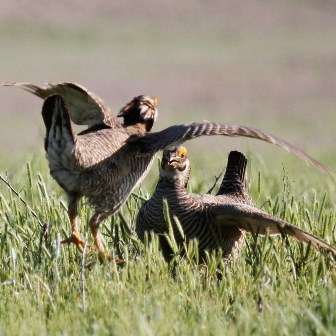
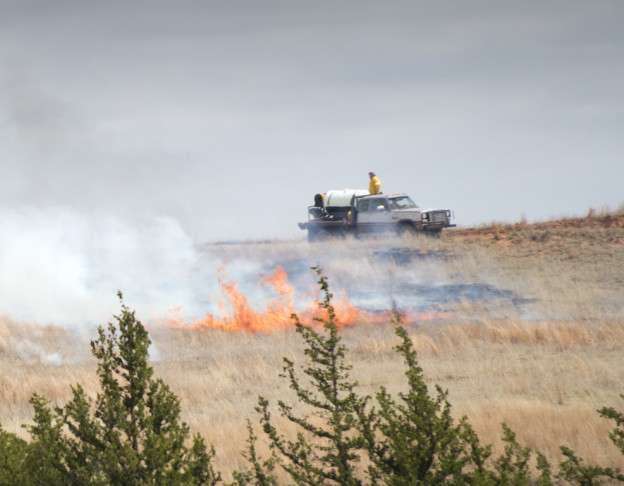
In the Lesser Prairie-Chicken Initiative action area, CSP assistance helps agricultural produces carry out range conservation practices that benefit both lesser prairie-chickens and ranch sustainability. (Photo: Jeremy Roberts, Conservation Media)

In the Lesser Prairie-Chicken Initiative action area, CSP assistance helps agricultural produces carry out range conservation practices that benefit both lesser prairie-chickens and ranch sustainability. (Photo: Jeremy Roberts, Conservation Media)

CSP provides financial and technical assistance to help producers voluntarily improve the health and productivity of private and Tribal working lands. NRCS also makes CSP funding available to producers as an additional opportunity to participate in regional landscape-level conservation efforts including the Sage Grouse InitiativeLesser Prairie-Chicken Initiative,  Longleaf Pine Initiative, and Ogallala Aquifer Initiative.

“The Conservation Stewardship Program is one of our most popular programs with producers because it results in real change on the ground by boosting soil and air quality, conserving clean water and enhancing wildlife habitat,” Vilsack said. “With this investment, we’ll be able to build on the already record number of acres enrolled in USDA’s conservation programs, enabling producers to achieve higher levels of conservation and adopt new and emerging conservation technologies on farms, ranches and forests.”

NRCS accepts applications for CSP throughout the year, but producers should submit applications by March 31 to USDA service centers to ensure they are considered for enrollment in 2016.

Participants with existing CSP contracts that will expire on Dec.31, 2016 have the option to renew their contracts for an additional five years if they agree to adopt additional activities to achieve higher levels of conservation on their lands. Applications to renew are also due by March 31.

Funding is available for more than 100 kinds of enhancements nationwide to help participants:

  • Improve soil quality through use of cover crops, conservation crop rotations and other activities that increase soil productivity.
  • Use water wisely and improve water quality through enhancements such as more efficient irrigation systems and weather monitoring.
  • Restore habitat for wildlife and pollinators such as the greater sage-grouse, lesser prairie-chicken and monarch butterfly through the use of better grazing systems and improved plant management.

A CSP self-screening checklist is available to help producers determine if the program is compatible with their operation. As part of the application process, applicants will work with NRCS field personnel to complete a resource inventory of their land to determine the conservation performance for existing and new conservation activities. The applicant’s conservation performance will be used to determine eligibility, ranking and payments.

Through the CSP, USDA has provided more than $4 billion since 2009 in assistance to farmers, ranchers and forest managers to enhance conservation on more than 70 million acres. For more on technical and financial assistance available through conservation programs, visit www.nrcs.usda.gov/GetStarted.

Since 2009, USDA has invested more than $29 billion to help producers make conservation improvements, working with as many as 500,000 farmers, ranchers and landowners to protect over 400 million acres nationwide, boosting soil and air quality, cleaning and conserving water and enhancing wildlife habitat. For an interactive look at USDA’s work in conservation and forestry over the course of this Administration, visit http://medium.com/usda-results.
NRCS and Texas Ranchers Team up for Conservation

With the help of technical and financial assistance from the Natural Resources Conservation Service (NRCS), Texas farmers and ranchers put conservation practices to work on 3.1 million acres in 2015. That’s the encouraging message NRCS State Conservationist Salvador Salinas delivered at the 2015 Texas Commodity Symposium at the Amarillo Farm and Ranch Show last month.

NRCS State Conservationist Salvador Salinas presents the annual conservation update at the Texas Commodity Symposium in December 2015.

NRCS State Conservationist Salvador Salinas presents the annual conservation update at the Texas Commodity Symposium in December 2015.

NRCS State Conservationist Salvador Salinas presents the annual conservation update at the Texas Commodity Symposium in December 2015.
In the Texas Panhandle alone, private landowners signed conservation assistance contracts covering 700,750 acres. This includes 13,000 acres under Lesser Prairie-Chicken Initiative contracts, and 13 new conservation plans on 47,300 acres under the Working Lands for Wildlife program.

Addressing the symposium’s many agricultural producers, Salinas said, “It’s a testament to the good conservation work that you producers have done over the past several years that the population of the lesser prairie-chicken is growing.”

Aerial surveys of lesser prairie-chicken leks (breeding sites) conducted in the spring of 2015 showed an estimated 30% population increase since the previous year’s survey in the Mixed Grass Prairie Region of the northeast Panhandle of Texas, northwest Oklahoma and south central Kansas.

Salinas credited farmers, ranchers, and other partners for natural resources conservation implementation across the state.  He explained how Farm Bill programs are the producer’s programs.

“To remain successful in our efforts to serve the farmers and ranchers of Texas, I continue to ask for your input to help NRCS tailor the conservation programs we administer to ensure we address all natural resource concerns for the state,” Salinas said.

Texas Rancher Creates Habitat Legacy

by Quenna Terry, NRCS Public Affairs Specialist

For third-generation farmer and rancher Steve Rader, diversity is the key to ranch sustainability. Rader Ranch, in the Panhandle region near Follett, is home to some 400 head of cattle in average rainfall years. It’s also home to abundant wildlife, including white tailed deer, pronghorn antelope, blue and bobwhite quail, and lesser prairie-chickens.

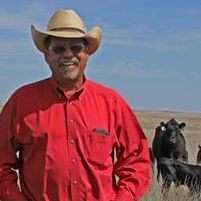
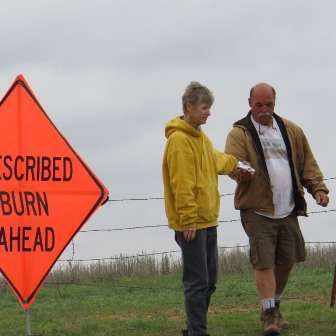
Steve Rader (red shirt) and Thomas Hunt, NRCS district conservationist Hemphill Field office. Rader says his family has worked with NRCS for more than 50 years.

Steve Rader (red shirt) and Thomas Hunt, NRCS district conservationist. Rader says his family has worked with NRCS for 50 years.

Rader manages the ranch for native rangeland, cropland with native grasses in the Conservation Reserve Program, and cropland with wheat. This diversity helped the both the ranch and its resident wildlife weather the intense drought of 2011-12.

Rader refers to his ranch as the “Refuge for Life,” a place he has always called home.   It’s where he and his wife, Linda, raised their three children, Justin, Haley and Sarah, and a way of life and legacy his grandfather started in 1917.

Without diversity on the ranch, Rader contends, grasses are easily overgrazed, especially during periods of drought.

“Our land is so fragile and it takes a long time to recover,” he says.  “Our cattle are spread out over a number of acres to let pastures rest.  We’ve had to whittle down our cattle numbers to keep from overgrazing.”

Rader first learned the value of such sustainable management strategies from his dad, who believed in resting pastures.  “We expect too much from our land,” Rader says. “Resting it helps.”

FB,IMG_1695_1

Steve Rader and Mary Foster, NRCS district conservationist, review Rader’s new conservation plan.

He recalls how, when he was young, his dad worked with USDA’s Soil Conservation Service, now the Natural Resources Conservation Service (NRCS) to help manage the land better.

“NRCS has helped us for 50 years, and they’ve been a strong, reliable source for good advice,” Rader says.  “NRCS has never led us in the wrong direction.”

Since he took over management of Rader Ranch in 1975, he has continued to work with NRCS to plan and implement conservation practices for livestock and wildlife.   NRCS technical and financial assistance have helped him improve forage, install water facilities for better grazing distribution; and implement rotational grazing.

To further his conservation goals, Rader recently reached out to NRCS to request a Working Lands For Wildlife predictability plan, through which landowners voluntarily adopt conservation practices that benefit the lesser prairie-chicken. By doing so, they receive protection from “incidental take” of the lesser prairie-chicken caused by implementing the conservation plan.

“Wildlife is a part of our life,” Rader says.  “My philosophy is: we have prairie- chickens on our land and we have to be good stewards of the land for any species.”

Correction: (11/24/15) Our original post of this article included reference to “invasive sand sage.” Sand sage is a natural and beneficial plant species in the Southern Great Plains. We will be creating a follow-up post to discuss the important role of brush species for the prairie community.

Historic Partnership Averts ESA Listing for Greater Sage-Grouse

Great news from the Sage Grouse Initiative:

On September 22, 2015, the U.S. Fish and Wildlife Service announced that voluntary sage grouse partnerships helped prevent ESA listing of the greater sage grouse.

An historic conservation partnership helped the U.S. Fish and Wildlife Service determine that the greater sage grouse did not warrant protection under the Endangered Species Act. Led by the USDA Natural Resources Conservation Service, the Sage Grouse Initiative (SGI) is a key catalyst for the voluntary, partnership-based work that is conserving America’s sagebrush sea.

Like the Lesser Prairie-Chicken Initiative, SGI is one of several NRCS landscape conservation initiatives. The greater sage grouse and lesser prairie-chicken are two of seven species targeted for conservation under the Natural Resources Conservation Service (NRCS) umbrella initiative called Working Lands for Wildlife (WLFW).

SGI’s shared vision of wildlife conservation through sustainable ranching provides win-win solutions for ranchers, sage grouse and 350 other wildlife species. With more than 1,100 participating ranches in 11 western states, SGI and its partners have already invested $424.5 million and conserved 4.4 million acres, an area twice the size of Yellowstone National Park.

SGI-2.0-photo-ken-miracle-homepage-tile-300x248

photo: Ken Miracle

SGI’s efforts won’t stop there: NRCS has committed $211 million more towards its new sage grouse investment strategy, dubbed SGI 2.0, through 2018. This investment provides partners with unprecedented certainty that conservation on working lands will continue. With partner contributions, SGI will have conserved or protected an estimated 8 million acres by 2018—an area more than seven times that of the Great Salt Lake. Here’s a sampling of SGI’s outcomes since 2010:

>> Targeting investments: SGI benefits large populations by targeting more than 75 percent of investments inside population strongholds. The remaining quarter maintains connectivity to surrounding habitats.

>> Decreasing exurban development: Conservation easements have increased 18-fold since 2010, reducing subdivision threat on 450,000 acres. Wyoming Governor’s energy policy and subdivision-halting easements together reduce anticipated bird losses by two-thirds.

>> Reducing cultivation of grazing lands: Farm Bill “Sodsaver” provision cut by half the risk of cultivation of large intact sagebrush grazing lands. Easements in Montana help maintain the longest-known sage grouse migration by reducing cultivation risk by 34 percent.

>> Restoring habitat quality: Invasive conifers have been removed on 400,000 acres. Two-thirds of the conifer threat has been alleviated on private lands in Oregon. Science shows that cuts maintain grouse populations in otherwise suitable habitat.

>> Improving rangeland health: SGI has enhanced rangeland health by applying grazing systems, re-vegetating former rangeland with sagebrush and perennial grasses, and controlling invasive weeds on more than 2.4 million acres. Proactively marking or moving high risk fences prevents 2,600 fence collisions annually.

>> Providing regulatory predictability: SGI provides peace of mind to ranchers. SGI has worked with the FWS to ensure that landowners who maintain NRCS conservation systems remain compliant with Endangered Species Act provisions.

>> Benefiting other species: SGI conserves the sagebrush ecosystem and its 350 other wildlife species. In Oregon, sagebrush-dependent songbirds climbed 55-81 percent in places where invading juniper trees were removed for sage grouse. In Wyoming, proactive measures for sage grouse also conserved 75 percent of habitats for migratory mule deer.

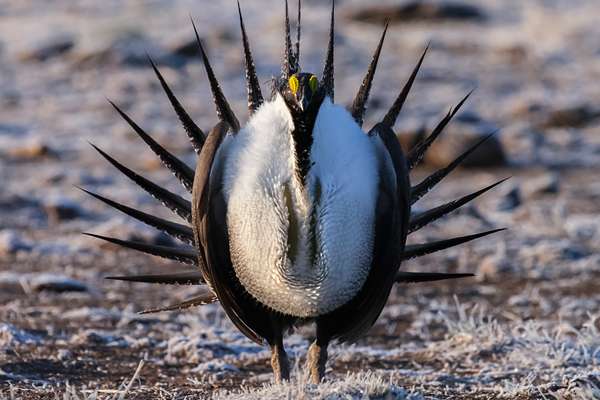
ken-miracle-sage-grouse-with-livestock-background

photo: Ken Miracle

Conservation work—both on public and private lands—is providing wins for wildlife across the country, from sage grouse and cottontails to black bears and native fish. We’ve recently celebrated decisions not to list the New England cottontail, the genetically distinct population of greater sage-grouse on the California-Nevada border, the Arctic grayling, and the proposed delisting of the Louisiana black bear.

All of these successes show that partnering with private landowners on targeted, voluntary conservation projects has tremendous positive impacts for wildlife, clean water, and healthy soil.

Read the USDA-NRCS press release here.

New Study Affirms Lesser Prairie-Chicken Research Practices

The results provided in this study, combined with data provided by Hagen et al. (2006), suggest researchers can trap and handle this threatened species without measurable negative effects to individuals if birds are immediately removed from traps, the number of consecutive trapping days on an individual lek are minimized (7–10 d), the position and location of the traps on the lek of capture is rotated every 2–4 d, and researchers use active trapping techniques to target individuals.

from “Evaluation of Capture Techniques on Lesser Prairie-Chicken Trap Injury and Survival,” by B. Grisham et al.

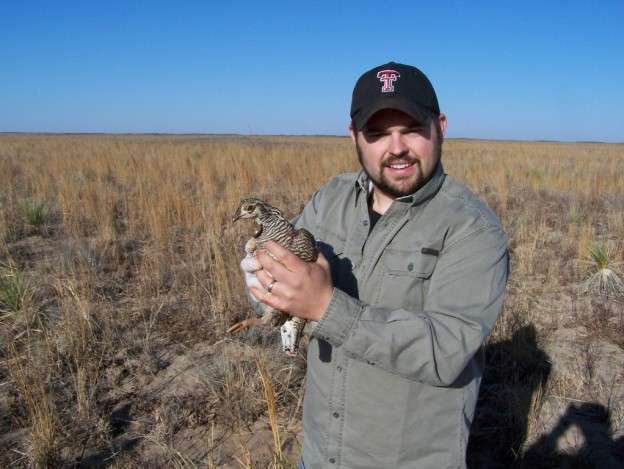
FB0260(BlakeGrisham)

Dr. Blake Grisham holds a radio-tagged lesser prairie-chicken (photo courtesy Blake Grisham).

Led by Dr. Blake Grisham of Texas Tech, a research team has published  a study in the Journal of Fish and Wildlife Management that demonstrates that the research activities of capture and radio-tagging do not negatively influence the survival of lesser prairie-chickens.  Done properly, these research techniques offer an important, proactive tool to improve lesser prairie-chicken habitat conservation and management.

Researcher approaches prairie-chickens captured in funnel trap.

Researcher approaches lesser prairie-chickens captured in funnel trap (photo courtesy David Haukos).

In their study, Evaluation of Capture Techniques on Lesser Prairie-Chicken Trap Injury and Survival,” researchers looked at the effects of trapping more than 400 lesser prairie-chickens from 2006 to 2012 via funnel traps, rocket nets, and drop nets. Based on the team’s findings, the paper offers  recommendations to researchers to minimize potential injuries during field work.

Read the full study (Click the link “PDF” that appears near the top of the page, above the article citation.)

Texas Rancher Creates Haven for Lesser Prairie Chickens

(This story originally appeared on the blog of the Farm Service Agency, an LPCI partner.)

James Blackwell is a third-generation landowner and nature lover in Littlefield, Texas, which lies northwest of Lubbock in the southern reaches of the panhandle. His 2,500 acres straddle Lamb and Hockley counties, a one-time Dust Bowl region. When the USDA introduced its Conservation Reserve Program (CRP) 30 years ago, Blackwell jumped at the chance to do his part. Since the beginning, he has gone the extra mile to protect and nurture local wildlife and plants.

Blackwell initially set aside 180 acres for conservation efforts in 1986, the beginning of CRP. He established an area of suitable grasses in which the lesser prairie-chicken could thrive. Since then he has gone much further to help conserve local wildlife. The move has in turn helped his land.

Over the years, Blackwell added 680 acres of established cover. Acting on his belief in the value of using local seed, he transitioned 360 acres from introduced grass species to native grasses. The extra effort paid off when he saw growth in the lesser prairie-chicken population. But he didn’t stop there.

Blackwell added four acres of a wildlife food plot and performed annual seeding to ensure further growth in both local grasses and the lesser prairie-chicken population.  He then set up dirt tanks—a Texas term for small man-made ponds—in three areas, filled by windmills. Ducks return every year to nest.

James Blackwell, a third-generation Texas landowner, has participated in the Conservation Reserve Program (CRP) since 1986.

James Blackwell, a third-generation Texas landowner, has participated in the Conservation Reserve Program (CRP) since 1986.

More recently, Blackwell installed water guzzlers—apparatus that catch and hold rain—to provide water where it is scarce. He performed prescribed burns to clear undesirable grasses and shrubs.

His efforts have reached beyond his fence line. Blackwell encourages neighbors to help with conservation efforts. Now, about 1,000 acres near his land is managed to benefit wildlife.

“I wanted to help local wildlife and repair land that became unfit for cultivation because of erosion,” said Blackwell. “These practices have helped the wildlife tremendously…. Mule deer are coming in and the quail population has been re-established. That’s beyond the fact that the practices also stopped erosion.”

Blackwell has been doing his part in CRP for 30 years, but he says he has no intention of slowing his efforts. He knows it’s good for everyone.

“I will continue conservation practices as long as I am alive,” said Blackwell. “It stops sand from blowing around the land, prevents erosion, and attracts wildlife. We want to provide an environment where people can enjoy the outdoors.”

Blackwell says conservation work is a family effort. He says he hopes to pass on sound conservation practices to the next generation.

CRP is a voluntary program that allows eligible landowners to receive annual rental payments and cost-share assistance to establish long-term, resource-conserving covers on eligible farmland throughout the duration of their 10-to-15-year contracts.

Since being established on December 23, 1985, CRP has helped prevent more than 8 billion tons of soil from eroding and protected more than 170,000 stream miles with riparian and grass buffers, more than 100,000 acres of bottomland hardwood trees, nearly 300,000 acres of flood-plain wetlands, and 250,000 acres each for duck nesting habitat and upland bird habitat.

2015 marks the 30th Anniversary of CRP. For an interactive tour of CRP success stories from across the U.S., please visit the FSA CRP 30th Anniversary website.

Find your local USDA Service Center.

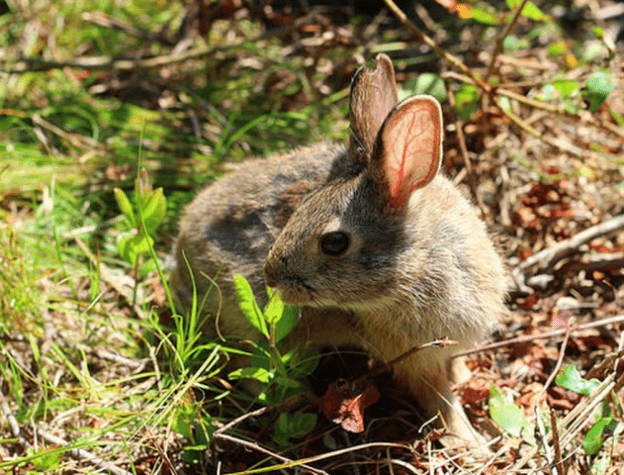
New England Cottontail: Another Success Story for Proactive Voluntary Conservation

Landowners on the East Coast brought about a major success today with their voluntary conservation efforts for the New England cottontail. U.S. Secretary of the Interior Sally Jewell announced that foresters and farmers have helped prevent the need to list the New England cottontail under the Endangered Species Act.

New England Cottontail

New England Cottontail

This partnership is three-quarters of the way to their goal of 13,500 cottontails in healthy, young forest landscapes. To date, 4,400 acres have been restored on private lands through the voluntary removal of trees and invasive species, planting of native shrubs and brush pile creation. Like the lesser prairie-chicken, the New England cottontail is one of seven species under the Natural Resources Conservation Service (NRCS) umbrella initiative called Working Lands for Wildlife (WLFW).

“The decision not to list the New England cottontail shows that wildlife and working lands cannot just coexist, but thrive, in harmony,” said Jason Weller, NRCS Chief. “USDA is proud of the private landowners who stepped forward to make proactive conservation improvements on their land, restoring critical habitat for this unique rabbit.”

Today’s announcement re-emphasizes the role of voluntary and proactive conservation for enacting positive change to benefit working lands and wildlife. This announcement follows a similar decision last April when voluntary measures precluded the need for the Service to list the genetically distinct population of sage grouse in the Bi-state region. The nation’s landowners—farmers, ranchers and forest managers—provide not only food and fiber for the world but also include a variety of environmental benefits, including habitat for wildlife. These people are our crucial partners in conservation.

The Service’s official “not warranted” for listing finding on the cottontail will be published in the Federal Register on Tuesday.

Conservation Reserve Program accepting more acreage for LPC habitat

U.S. Department of Agriculture (USDA) recently announced increases in the acreage of agricultural lands eligible for funding through one of its wildlife habitat restoration programs. The program, known as State Acres for Wildlife Enhancement (SAFE) is an initiative within the Conservation Reserve Program (CRP).

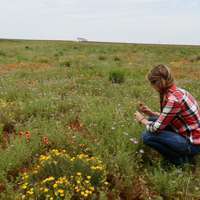
LPCI wildlife biologist Megan Waechter studies CRP grassland.

LPCI wildlife biologist Megan Waechter studies CRP grassland.

The USDA Farm Service Agency (FSA) administers CRP and its SAFE program, and NRCS provides technical support to enrolled landowners. The Texas FSA office announced a 27,300-acre increase, and Kansas FSA announced a 55,000-acre increase (click links to read state funding announcements).

If you are a farmer or rancher in the five-state lesser prairie-chicken range, contact your local USDA/FSA office to determine whether you are located in a designated SAFE-eligible area.

CRP uses Farm Bill funding to provide annual rental payments to agricultural landowners to establish grassland cover on sensitive agricultural lands to reduce erosion, improve water quality, and establish wildlife habitat. The State Acres for Wildlife Enhancement (SAFE) program is a subset of CRP specifically targeted to significant natural resource landscapes and associated benefits, including threatened species like the lesser prairie-chicken. SAFE offers incentive payments for new enrollments, annual acreage rental payments, and cost-share funding.


Patch Burn Grazing Annual Meeting, August 26-28

The Patch Burn Grazing Annual Meeting has come to lesser prairie-chicken country! Two outstanding ranch operations whose stewardship practices are making a real difference for lesser prairie-chickens are the featured field tour sites for the upcoming meeting, to be held August 26-28, 2015, in Pratt, Kansas.

Ed Koger of the Hashknife Ranch lights a perimeter fire. April, 2015.

Ed Koger of the Hashknife Ranch lights a perimeter fire. April, 2015.

Download the Program Schedule (pdf)

On August 27, meeting participants will tour Ed Koger’s Hashknife Ranch, where Ed has been conducting prescribed burns since 1977, and utilizing patch burn grazing for a decade, with outstanding results for both wildlife and forage production.

038FB

Eva and Keith Yearout, managers of the Z-Bar Ranch, help neighbors conduct a prescribed burn. April, 2015.

On August 28, participants have the opportunity to join a tour of the Z-Bar Ranch, where ranch managers  Eva and Keith Yearout steward grasslands following principles of pyric herbivory, with bison as the primary grazers.

The meeting will include:

  • equipment expo (pre-meeting 25, and 26)
  • presentations (26th)
  • tour of the Hashknife Ranch (27th)
  • optional tour of the Z-bar ranch (Turner Enterprises) (28th)

According to the Great Plains Fire Science Exchange, which is hosting the event, this meeting is a great fit for producers, grassland ecologists, researchers, graduate students, fire ecologists, and the general public interested in the interactions of fire and grazing with plants, wildlife, soils, and more.

Register for the meeting.

A limited number of travel stipends are available for non-federal employee attendees.

Aerial survey shows 25% increase in lesser prairie-chicken population

Abundant spring rainfall, along with ongoing conservation efforts, has helped increase lesser prairie-chicken populations approximately 25 percent from 2014 to 2015, according to results from the annual range-wide aerial survey.

The total lesser prairie-chicken population now numbers about 29,000 birds, according to Bill Van Pelt, grasslands coordinator for the Western Association of Fish and Wildlife Agencies (WAFWA), which commissioned the survey.

Males displaying on a lek in western Kansas. Courtesy of David Haukos.

Males displaying on a lek in western Kansas. Courtesy of David Haukos.

Researchers observed increases in three of four of the bird’s ecoregions across five states—Colorado, Kansas, New Mexico, Oklahoma and Texas. The Sand Sage Prairie Region of southeast Colorado showed the biggest gain, with numbers up approximately 75 percent from a year ago. The Mixed Grass Prairie Region of the northeast Panhandle of Texas, northwest Oklahoma and south central Kansas saw a roughly 30 percent increase, and the Shortgrass Prairie Region of northwest Kansas population grew by about 27 percent.

“An overall 25 percent increase in the lesser prairie-chicken population across its five-state range is welcome news,” said Ross Melinchuk, chairman of the WAFWA Lesser Prairie-Chicken Initiative Council.

WAFWA coordinates efforts established under the Lesser Prairie-Chicken Range-wide Conservation Plan, an initiative to engage private landowners and industry to conserve the bird’s habitat and minimize impacts to the species.

Melinchuk expressed optimism about the species’ recovery. “This year’s increase, on the heels of last year’s 20 percent increase, is evidence of the species’ ability to rapidly recover from downturns as a result of drought and poor range condition.”

Jon Ungerer, coordinator of the Natural Resources Conservation Service’s Lesser Prairie-Chicken Initiative (LPCI), agrees. “We’re encouraged by these numbers. The kind of drought we’ve just gone through is hard on wildlife and producers. Plentiful rain was critical to the recovery. Much of the credit also goes to many landowners who implemented conservation strategies that helped the range rebound quickly.”

Ungerer explains, “Range management plans with sound drought-contingency strategies decrease the effects of drought, resulting in quicker recovery of the forage and habitat needed by producers and wildlife alike.”

Launched by NRCS in 2010, the LPCI partnership offers financial and technical assistance to agricultural producers to implement range management practices that benefit lesser prairie-chicken habitat and ranch operations. WAFWA and NRCS collaborate closely through LPCI and the Range-wide Conservation Plan to provide assistance to private landowners, develop conservation plans, and monitor range health.

The only ecoregion with a continued downward lesser prairie-chicken population trend is the Shinnery Oak Region of eastern New Mexico and western Texas. This ecoregion is recovering from a prolonged period of drought. Recent roadside surveys indicate lesser prairie-chickens in this area are starting to respond to late 2014 and early 2015 rainfall.

“We’re confident that with continued moisture and drought relief, next year’s shinnery oak populations should continue to recover,” said WAFWA’s Van Pelt.

To date, industry partners have committed $46 million in enrollment and mitigation fees to WAFWA to pay for mitigation actions, and landowners across the range have agreed to conserve nearly 100,000 acres of habitat through 10-year and permanent conservation agreements.

NRCS investments of more than $20 million leveraged additional partner funding, resulting in over $25 million in on-the-ground habitat conservation practices. Through LPCI, more than 500 private landowners have enrolled almost 1 million acres in voluntary range-enhancement programs.

The lesser prairie-chicken was listed as threatened under the Endangered Species Act in May 2014. The final listing rule allowed private industry to develop and impact habitat if enrolled and participating in WAFWA’s range-wide plan, and it also provided various options that landowners can use to receive similar coverage.

The range-wide plan provides incentives for landowners and industry to protect and restore habitat, which is critical since they own and manage some 95% of the bird’s range. Farmers and ranchers may still enroll in LPCI and WAFWA conservation contracts and receive regulatory assurances for their agricultural operations.

For information on enrolling your land, contact your local USDA/NRCS office. For more information on WAFWA, including the range-wide plan, visit www.wafwa.org. Learn more about LPCI at www.lpcinitiative.org.