Author Archives: Greg Peters

10 Things You Can Do for Lesser Prairie-Chickens

What can you do to help lesser prairie-chickens? Whether or not you own prairie habitat, there’s  a whole lot you can do to act on behalf of prairie wildlife.

1. Take Part in the Lesser Prairie-Chicken Initiative

Oklahoma rancher Martin Moore reviews his grazing plan with NRCS District Conservationist Paul Clark.

If you’re a landowner in the lesser prairie-chicken’s habitat range, you may be eligible to receive technical and financial assistance from the Lesser Prairie-Chicken Initiative (LPCI) to take part in conservation planning and range management that benefit lesser prairie-chickens AND the bottom line of your agricultural operation.

Find out how to enroll.

2. Support Landowners Practicing Careful Stewardship 

Healthy grasslands don’t just happen–they’re the result of careful stewardship. Ninety-five percent of the grasslands lesser prairie-chickens inhabit is privately owned. When you pay access fees to hunt, fish, or bird-watch on healthy grasslands, you’re supporting excellent stewardship and offering incentive for landowners to maintain quality habitat on their land.

3. Support LPCI’s Partners

Dogs await the start of the Bird Dog Parade at the annual Pheasant Fest, hosted by Pheasants Forever, an LPCI partner organization. (Photo: Pioneer Press, Dave Orrick)

Visit our Partners page and check out the many partner organizations who work with LPCI to achieve lesser prairie-chicken conservation through sustainable agriculture.

You’ll find links to their websites, where you can find out more about them and how to support their efforts.

4. Purchase a Hunting License

The purchase of licenses by hunters, trappers and anglers, as well as the taxes derived from the sale of sporting equipment and fuels for boating, supports fish and wildlife habitat conservation and research.

5. Buy Grass-fed Beef

You can act on behalf of prairie grasslands and the wildlife that depend on them through your supermarket choices.  When you buy grass-fed beef, you support keeping our grasslands as grasslands.

6. Discover the Prairie

There are so many ways to learn more about the prairie.  Visit our Prairie Community pages to find out more about lesser prairie-chickens and the complex community of plants and animals they live with. Our News and Resources page offers many links to readings, videos, and podcasts on LPCI, sustainable range management, prairie ecology, and much more. Sign up for LPCI’s e-newsletter to stay posted on what we’re up to.

Viewing blinds on the Selman Ranch in Oklahoma, one of the field sites for the Lesser Prairie-Chicken Festival in Woodward, OK.

Best of all, spend time in native grasslands across the Great Plains, at sites like the Konza Prairie Biological Station, where managers aim to sustain the complex prairie ecosystem through management that mimics historic disturbance patterns. Attend prairie festivals, like Woodward Oklahoma’s Lesser Prairie-Chicken Festival. If you haven’t yet sat in a blind in the early morning hours, listening to prairie-chickens boom and foot-stomp and cluck and spar in the first light of a spring day, it’s high time!


7. Volunteer Time and Sweat 

Even if you don’t own prairie grasslands, you can help out with their stewardship. Volunteer to help a ranching neighbor carry out conservation practices. Contact your local prescribed burn association and volunteer to help out with prescribed burns. Some of our partner organizations hold volunteer days for clearing invasive species, installing wildlife water tanks, and more, so be sure to check out their websites for more information. Let your state representatives know that you support grassland conservation.

8. Celebrate all things prairie

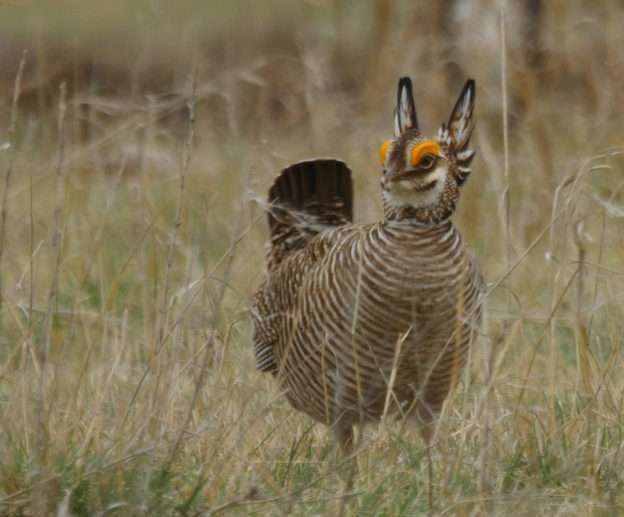
Lesser prairie-chicken (photo Jeremy Roberts, Conservation Media)

If you are fortunate enough to live on the Great Plains, hold an event in your community to celebrate the prairie: the remarkable community of life there, the bounty it brings to our lives, and the resilience and fragility of the prairie ecosystem, the ranching heritage it supports. Involve your local school in the celebration -– children are the next generation of land stewards.

9. Spread the Word

Know someone with land in the lesser prairie-chicken’s range? Tell them about LPCI’s voluntary conservation programs and the technical and financial assistance LPCI provides.

Like LPCI on Facebook. By going to the LPCI Facebook page and clicking LIKE at the top, you’ll be able to follow LPCI news and learn more about the world of the lesser prairie-chicken. If you see a story that moves you, share it with your friends.

10. Share Your Story

Have you had a memorable encounter with lesser prairie-chickens or the prairie in general? Helped conserve prairie habitat for lesser prairie-chickens and other wildlife? Seen first-hand how conservation practices benefit both people and wildlife? We’d love to hear your story!
Lessons from the Heath Hen

Though the effort to save the heath hen was unsuccessful, it laid the groundwork for the way we undertake conservation of other species.

Eighty-five years ago today, the last living heath hen was seen for the last time. Booming Ben, as the lone grouse came to be known, had been the last of his kind since 1929. He faithfully returned each spring to display alone at his traditional lekking ground, making his last appearance on March 11, 1932.

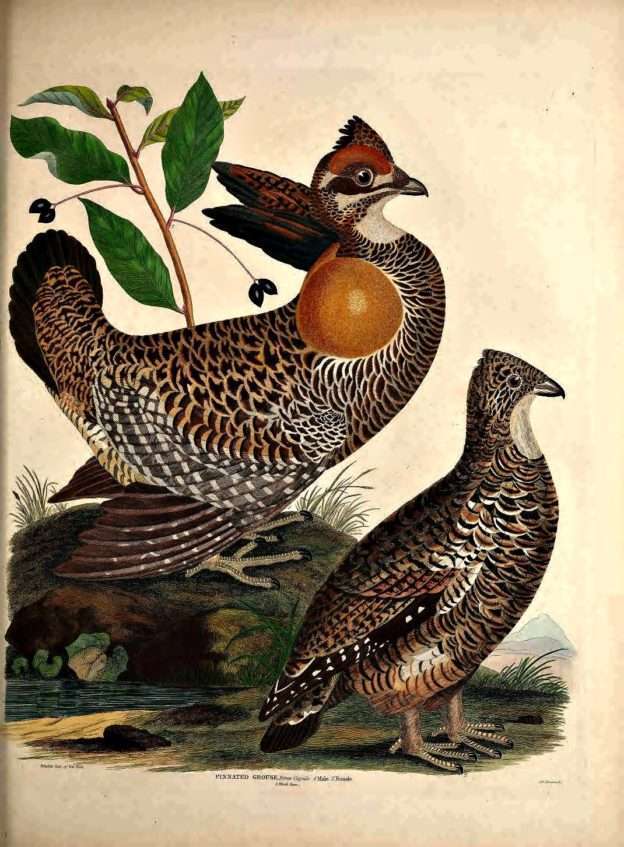
Heath hens, John James Audubon

A sub-species of the greater prairie-chicken (Tympanuchus cupido), the heath hen (Tympanuchus cupido cupido) was a close cousin of the lesser prairie-chicken (Tympanuchus pallidicinctus). The likeness between the two is apparent when comparing ,  with contemporary footage of male lesser-prairie chickens.

Heath hens once ranged across scrubby coastal heath barrens from Maine to Virginia. Intensive hunting, coastal settlement, and fire suppression caused the population to plummet. By 1870, heath hens had vanished from the mainland US and only remained on Martha’s Vineyard, an island off the coast of Massachusetts.

As heath hen populations further dwindled, Martha’s Vineyard officials banned hunting of heath hens in 1906. Two years later, they created a 600-acre preserve for the birds. Far too little, far too late. The tiny remaining population was highly vulnerable to disruption. Add to that a lack of understanding of prairie grouse ecology—most notably of fire’s role in maintaining viable habitat—and the heath hen’s demise was sealed.

From the failed attempt to save heath hens from extinction, we learned the importance of early intervention—not waiting until a species hangs on the brink of extinction to begin efforts to boost its numbers. We also learned the importance of scientific research in understanding the ecological forces driving population dynamics. And we learned that landscape-level habitat problems need landscape-level solutions.

Fast-forward to 2010, when the Natural Resources Conservation Service (NRCS) launched the Lesser Prairie-Chicken Initiative—a landscape-level effort to maintain healthy habitat across the lesser prairie-chicken’s current five-state range as a means to increase the population of this at-risk species.

Scientific research helps identify core lesser prairie-chicken habitat and connective habitat corridors so that conservation efforts can focus where they’ll have the greatest impact. Research continues to help hone conservation efforts, increasing our understanding of population dynamics and fine-tuning our strategies for improving habitat health (see LPCI’s Science to Solutions series).

Though the effort to save the heath hen was unsuccessful, it laid the groundwork for the way we undertake conservation of other species. Through LPCI and other similar landscape conservation initiatives, private landowners can voluntarily partake in a collaborative effort to conserve not only an iconic species but an iconic way of life. LPCI builds upon the fact that when grasslands are healthy and productive, both wildlife and ranchers are better off. That’s win-win conservation at its best.

Leading LPCI’s Effort to Conserve Prairie Wildlife and Ranching

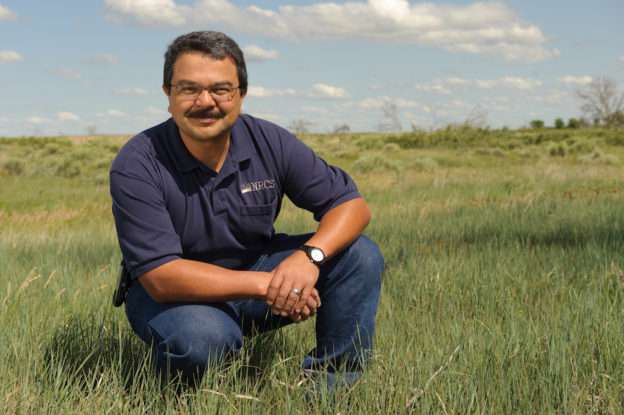
For Manuel De Leon, acting coordinator of the Lesser Prairie-Chicken Initiative (LPCI), working one-on-one with landowners is both the highlight of his job and the key to making a real difference for lesser prairie-chickens. A Lubbock-area native, Manuel has worked for the Natural Resources Conservation Service in the Texas Panhandle since 2002. As LPCI’s acting coordinator, he’s overseeing the effort to conserve habitat for lesser prairie-chickens across their five-state range.

Manuel came to this career by a circuitous route. Following in his older brother’s footsteps, he began college as a business major. During his sophomore year, he discovered a listing in the course catalog that changed his life. “I saw this thing called ‘wildlife management’—I never knew that was a major!”  Manuel changed his major and was hooked.

After completing his bachelor’s degree in wildlife management, he pursued a master’s degree in wildlife science, spending two field seasons studying shorebird habitat use and behavior in North Dakota prairie potholes. A decade of work for the U.S. Fish and Wildlife Service followed, taking him to such beautiful sites as Aransas National Wildlife Refuge.

By the early 2000s, Manuel was ready to return home to northern Texas. He began his career with NRCS as a soil conservationist in Muleshoe in 2002, in the heart of Texas lesser prairie-chicken country. Ever since then, he has provided wildlife-based technical assistance to landowners interested in improving wildlife habitat on their ranchlands.

LPCI Acting Coordinator Manuel De Leon and NRCS Soil Conservationist Brittany Anderson use GPS technology during conservation planning on a ranch near Pampa, Texas.

A central part of his job, Manuel says, is to discuss the range of management options with landowners. “Even if we have an inkling that the landowner has their mind made up to plant row crops, it’s important that we provide alternatives,” Manuel says.

“If the land has potential as [lesser prairie] chicken habitat, we might suggest letting the grass grow for a year or two, running a prescribed fire, and creating a prescribed grazing plan. Then we can reach into the financial toolbox for programs that can help them offset the cost of practices that are going to be beneficial to the land and to everybody. We all live downstream, as the saying goes.”

As acting coordinator for LPCI, Manuel is working with LPCI partners to fine-tune LPCI’s conservation delivery. In that process, he sees landowners as the most important partner of all. With 95% of lesser prairie-chicken habitat on private land, landowners hold the key to conservation success. “They need to put food on the table and make a living. We need to work with them with flexibility in order to make conservation happen.”

The Lesser Prairie-Chicken Initiative is a partnership-based, science-driven effort that uses voluntary incentives to conserve America’s western rangelands, wildlife, and rural way of life. This initiative is part of Working Lands For Wildlife, which is led by the USDA Natural Resource Conservation Service.

Chickens and Woody Encroachment: Research Presentations Available for Viewing

On January 29, the Society for Range Management hosted an full-day symposium on the effects  of woody encroachment on western grouse–namely lesser prairie-chickens and greater sage grouse. Twenty scientists presented their findings and discussed management implications for grassland and sagebrush habitats.

If you missed the live-streaming of those presentations, don’t worry—they’re now available for on-line viewing. While all of the 20-minute presentations are captivating, a small subset specifically relate to lesser prairie-chickens and the southern Great Plains, and we’ve highlighted these below. You can view the full suite of presentations on the Sage Grouse Initiative YouTube playlist for the Woodland Expansion Symposium.

1. Impact of Mesquite Distribution on Seasonal Space Use of Lesser Prairie-Chickens. Lead researcher Matt Bogie presents his findings from his study of lesser prairie-chickens in eastern New Mexico.

Read our Science to Solutions summary of Bogie’s research, Mesquite Removal Restores Habitat for Lesser Prairie-Chickens.


2. Lesser Prairie-Chicken Avoidance of Trees in a Grassland Landscape. Lead researcher Joseph Lautenbach presents findings from his study of lesser prairie-chickens in redcedar-encroached grasslands in south-central Kansas.

Read our Science to Solutions summary of this research, Redcedar Removal Restores LEPC Habitat.


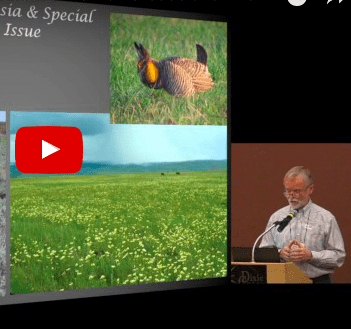
3. Targeted Woodland Removal to Recover At-Risk Grouse and Their Sagebrush-Steppe and Prairie Ecosystems. Rick Miller presents a new mapping tool that offers high-resolution mapping of woody encroachment in lesser prairie-chicken and greater sage-grouse habitat regions and discusses implications for management.

Read our Science to Solutions summary of this research, New Mapping Tool Helps Target Woody Encroachment.


New Role Coordinates LPCI’s Field Capacity, Deepens Partnerships

Since 2012, Jordan Menge has worked with landowners in the Texas Panhandle to help restore habitat for lesser prairie-chickens, as part of the Lesser Prairie-Chicken Initiative’s Strategic Watershed Action Team (SWAT). Now he has taken on a new role, as the SWAT Capacity Coordinator, overseeing SWAT field staff across the five-state LPCI action area.

Jordan Menge, LPCI’s SWAT Capacity Coordinator

Through LPCI, the Natural Resources Conservation Service (NRCS) teams up with partner agencies and organizations to expand the field delivery, science, and communications capacity for lesser prairie-chicken conservation. Pooling resources, partner organizations fund SWAT range conservationists and wildlife biologists based in field offices in critical habitat areas in the Southern Plains states.

SWAT field staffers work with landowners who chose to participate in voluntary range conservation programs funded through the federal Farm Bill and through the Western Association of Fish and Wildlife Agencies (WAFWA) Lesser Prairie-Chicken Range-wide Plan.

Under contract with LPCI partner organization Pheasants Forever, Menge will help build LPCI’s SWAT program, aiming to have five SWAT field staffers in place by the end of 2017—one in each of the five states that are home to lesser prairie-chickens.

“Over time—hopefully in the next year or two—we can expand the SWAT program to 10 people,” Menge said.

Menge will work with NRCS and WAFWA biologists to train field staff. “New science is constantly informing conservation practices.” Menge said.  “Training SWAT staff to incorporate the latest research findings related to lesser prairie-chicken ecology helps ensure that conservation dollars deliver the greatest return on investment.”

His role will help coordinate conservation efforts among partner organizations. “We’ll be pretty involved with WAFWA, carrying out vegetation monitoring and conservation planning.”

“I hope we can bring better communications through our partners to implement positive conservation on the ground for producers and for chickens,” Menge said.

Great to have you in your new role, Jordan!


Science to Solutions: New Mapping Tool Helps Target Woody Encroachment

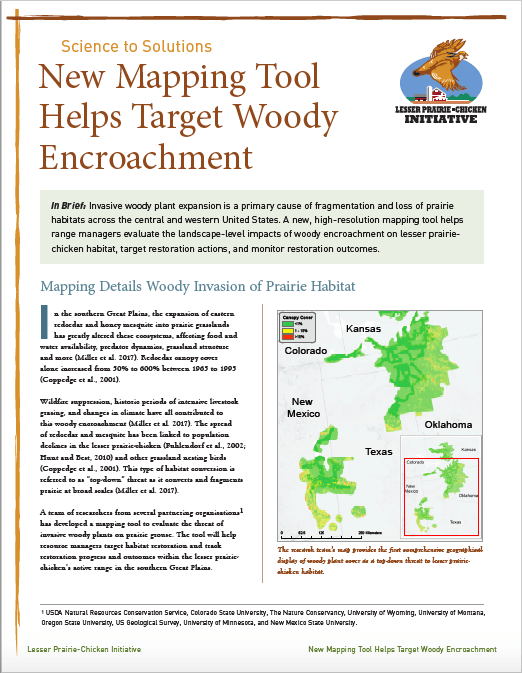
Lesser prairie-chickens avoid prairie habitat with just one redcedar per acre. In the southwestern part of their range, they strongly prefer sites with less than one percent mesquite cover. Range managers need to be able to detect very low densities of encroaching woody plants on the landscape  to target effective conservation efforts. The Lesser Prairie-Chicken Initiative’s latest Science to Solutions paper describes a new mapping tool that offers that capacity and more.

Read SCIENCE TO SOLUTIONS: New Mapping Tool Helps Target Woody Encroachment

The new, high-resolution mapping tool will allow range managers to evaluate the landscape-level impacts of woody encroachment on both lesser prairie-chicken and greater sage-grouse habitat even at very low densities. This precise information helps target conservation actions and monitor results.

A team of scientists from USDA Natural Resources Conservation Service, Colorado State University, The Nature Conservancy, University of Wyoming, University of Montana, Oregon State University, US Geological Survey, University of Minnesota, and New Mexico State University produced the mapping tool.

A  research paper on the mapping tool and its applications was published earlier this month in a special edition of Rangeland Ecology & Management, the scientific journal of the Society for Range Management, focused on the effects and management of woody encroachment as it relates to habitat for lesser prairie-chickens and greater sage-grouse.

A full-day symposium on the research showcased in the January 2017 issue of Rangeland Ecology & Management will take place on January 31, 2017, at the Society for Range Management annual conference. The symposium will be live-streamed on the Sage Grouse Initiative website (live-streaming is free and open to the public).

LPCI’s Science to Solutions summary explains the tool and its applications, particularly as it relates to lesser prairie-chicken habitat conservation.

Science Reveals Sage Advice: Cut (the Right) Trees to Save the Bird and the Herd

by Brianna Randall, Sage Grouse Initiative communications director

On January 31, the Sage Grouse Initiative website will live-stream a full-day symposium sharing the latest scientific research on effects of woody encroachment on lesser prairie-chickens and greater sage-grouse.  See the presentation schedule and find out how to join the free live-streaming.

What do America’s prairies and sagebrush have in common? Ranchers, for one. Grouse, for another.

And, third, a woody plant invasion that’s threatening to take over the healthy rangelands that support  birds and people alike.

Woody species like juniper and pinyon pine trees in sagebrush country, and red cedar and mesquite in the southern Great Plains, are encroaching onto grasslands to the detriment of working ranchlands and wildlife. In the West’s Great Basin alone, conifers have expanded their range by 600 percent in the past 150 years, drying up precious streams and threatening 350 species.

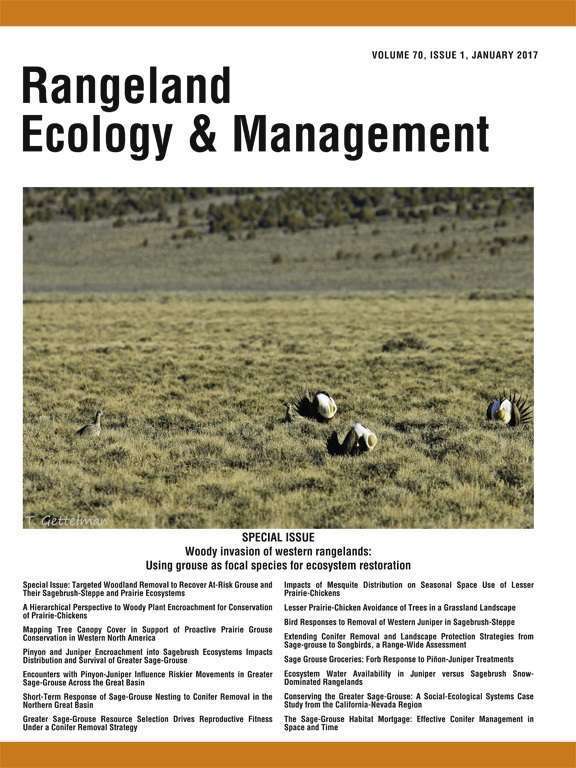
The January 2017 issue of Rangeland Ecology & Management is dedicated to research on woodland expansion in the West’s sagebrush and grassland ecosystems. All articles are freely available for viewing.

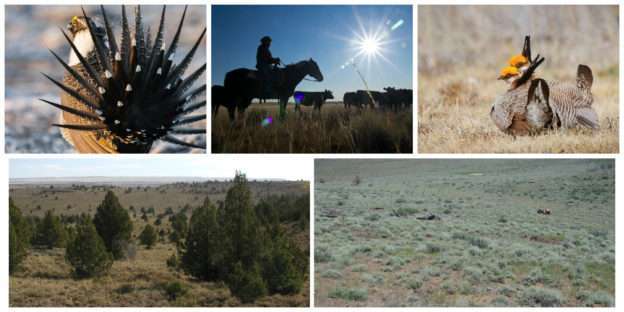
This month, the Society for Range Management’s (SRM) scientific journal, Rangeland Ecology & Management, released a special issue focused entirely on this landscape-level threat. Fifteen new research papers describe the impacts of the woody invasion of western rangelands, using grouse as a focal species to evaluate habitat restoration.

This new research contributes to a growing body of science demonstrating the impacts of woodland expansion on wildlife in the West. Using science to target conservation practices maximizes the return on investment, and helps managers and landowners fine-tune practices that benefit the bird and the herd.

For the USDA Natural Resources Conservation Service (NRCS), removing encroaching woody plants has long been a conservation priority through its Sage Grouse Initiative and Lesser Prairie-Chicken Initiative.

The greater sage-grouse in sagebrush country and the lesser prairie-chicken in the southern Great Plains both serve as barometers for the health of their respective regions, since these birds depend on large swaths of intact, healthy habitat to survive. NRCS uses science to target the best places and ways to work with ranchers to improve both working lands and habitat for these at-risk birds.

Since 2010, thousands of ranchers have made wildlife-friendly improvements to more than 6 million acres in the West—including removing woody plants from a total of 600,000 acres—benefiting sage grouse and prairie chicken while improving livestock forage on privately owned rangeland.

For example, one study in the new issue of SRM’s research journal shows that lesser prairie-chickens strongly prefer nest sites with less than 1 percent mesquite canopy cover and rarely use habitat where cover exceeds 15 percent. Another study shows that 86 percent  of sage grouse hens avoided conifer-invaded habitat, but that—after conifer removal—29 percent of tracked hens chose to nest in restored habitat.

Another research paper featured in this special journal issue shows that sagebrush-dominated landscapes hold snow longer than conifer-dominated lands, improving water availability during dry summer months – an invaluable ecosystem service in the arid West.

To ensure this new cutting-edge research reaches the broadest possible audience and informs rangeland practices far and wide, SRM, NRCS, and the Bureau of Land Management are partnering to live-stream presentations from a January 31 symposium held at the Society for Range Management’s annual conference in St. George, Utah.

The full-day symposium will feature 20 presentations on the latest findings about how woodland invasion is affecting grouse, wildlife, and people living in sagebrush and prairie ecosystems. All presentations will be free to watch on the Sage Grouse Initiative’s website.

To see the schedule of talks and find links to all research papers, visit the Sage Grouse Initiative website.

Helping Texas Ranchers and Wildlife, One Plan at a Time 

By Quenna Terry, NRCS Public Affairs Specialist

In the Panhandle of Texas, three things are certain: cattle will graze the grassy prairies, the wind will turn windmills on the plains, and Clint Rollins can be found helping ranchers improve wildlife habitat on their land.

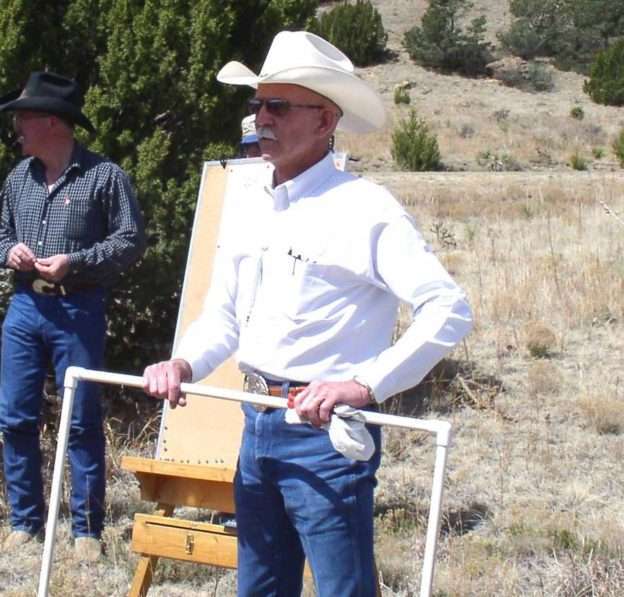
NRCS Range Management Specialist Clint Rollins, at a training session with landowners.

Rollins is a range management specialist in Amarillo for the USDA Natural Resources Conservation Service (NRCS). His 38 years of knowledge have helped fuel the success of Texas NRCS in engaging ranchers to voluntarily carry out habitat conservation practices that benefit the lesser prairie-chicken, with technical and financial assistance from the NRCS-led Lesser Prairie-Chicken Initiative (LPCI).

Lesser prairie-chickens once inhabited some 180,000 square miles of the southern Great Plains, in Colorado, Kansas, Oklahoma, New Mexico and Texas. They now occupy about 17% of that original range. In Texas, they’re found in northeastern and southwestern areas of the Panhandle region.

Rollins took the lead in conservation planning efforts in the northeastern Panhandle—particularly Lipscomb, Hemphill, Hansford, Ochiltree, and Gray counties—helping ranchers plan and adopt conservation practices most beneficial to wildlife habitat, while ensuring compatibility with livestock grazing.

Stan Bradbury, NRCS zone range management specialist said, “Rollins has spent years developing relationships with agricultural producers in the Panhandle region. It’s this kind of trust- and relationship-building that has allowed Rollins and other employees to work with these ranchers and conduct field work, data entry, and mapping.”

Guiding the Conservation Planning Process

LPCI is one of several landscape-level conservation initiatives within the Working Lands for Wildlife (WLFW) program, which works to restore at-risk wildlife species on private working lands, while providing landowners with regulatory predictability. Part of that process is developing a predictability plan.

 “‘Predictability plan’ is a fancy word for a conservation plan,” Rollins said.  “It’s a road map for a producer’s land management goals.”  Predictability plans have the added benefit of providing regulatory certainty to participating landowners.

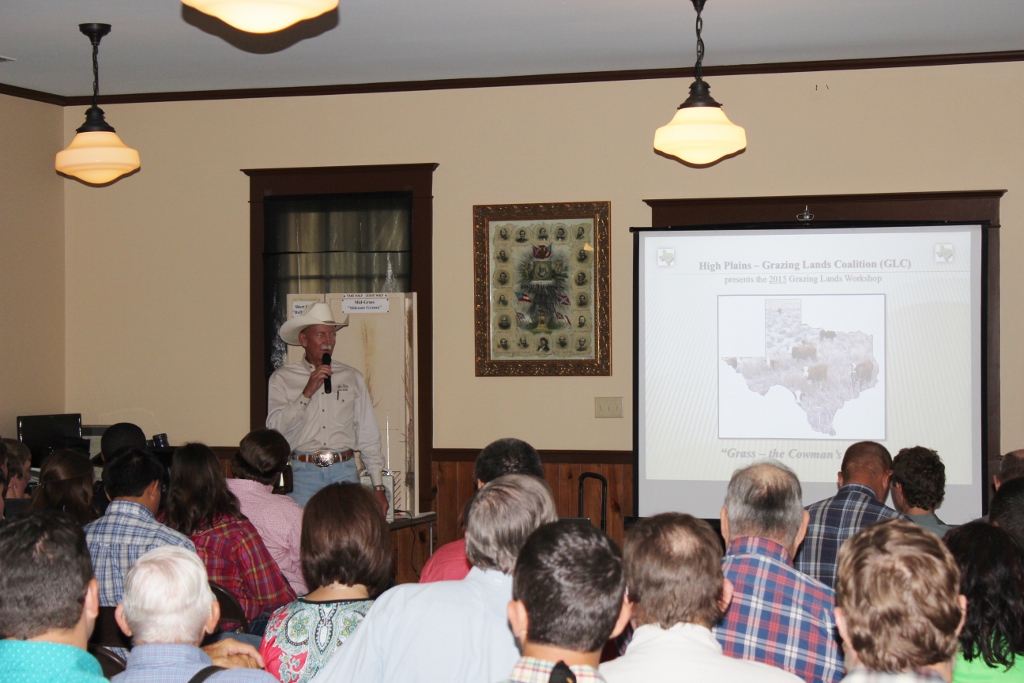
NRCS Range Management Specialist Clint Rollins leads a range workshop in Oklahoma.

To develop a conservation plan, Rollins measures and assesses forage production, plant communities, plant composition and brush canopy transacts. “Our plant transects start with identification of Prickly pear, Yucca, [shinnery] oak, and other species to determine the grazeable acres,” Rollins said.

Using state-of-the-art mapping tools, Rollins first creates a map that identifies grazing and non-grazing areas.  “On an annual basis we want to know the forage demand with forage supply,” Rollins said. “If we didn’t have the technology we have today, it would take ten times as long to do conservation plans of this magnitude,” he said.

Rollins then recommends conservation practices that meet the needs of lesser prairie-chickens and the management goals of the participating landowner. These recommendations include such core practices as prescribed grazing and brush management.

Other practices can include prescribed fire, water development to better distribute grazing, weed control, wildlife-friendly structures such as ramps in water tanks, cover crops, and more.

“The most important practice is prescribed grazing to balance forage supply,” Rollins said.

From 2012 to 2015, Rollins helped seven ranchers on more than 40,000 acres. “I’ve worked with good stewards of the land who are livestock producers,” he said.  “The people I’ve worked with trust me, and they live on the land that I’ve worked on.”

Rollins has found that when most ranchers learn more about the resources they have on their land, they are eager to improve them to benefit both their ranching operation and the various wildlife species that make their home on their land.

Drought contingency planning is a key part of the conservation planning process, identifying management actions to take if drought conditions occur. Quick, carefully planned response to drought can reduce both financial and habitat impacts.

In 2012, following of one of the worst droughts in recent history, ranchers in the Panhandle region were panicked. Clay loam soils that produced 3,500-4,000 pounds of forage per acre in wetter years produced just 1,000-1,200 pounds in 2012.

 “I had to help calm the ranchers down,” Rollins said. “My job was to convince them to take a vacation and come back later.”  Wet weather following the drought improved grazing distribution.

According to Rollins, the land needed time to heal itself.  From 2012 through 2015 the grass cover made a comeback, and the ranchers could see a difference through the recovery options NRCS had to offer them.

In 2015 and 2016, through the efforts of Rollins and his colleagues in the Panhandle Region, the NRCS and Texas State Soil and Water Conservation Board, working through the Soil and Water Conservation Districts, provided conservation planning assistance to 27 private agricultural producers.

Their work resulted in conservation plans for 186,000 acres of grassland habitat through LPCI and WLFW technical assistance programs, with an additional 40,000 acres nearing completion.  In the coming year, predictability planning in the Panhandle region is estimated to exceed 200,000 acres.

Rangeland Science Journal Publishes Special Issue On Woody Plant Encroachment

Tune in on January 31 for free live-streaming from a symposium on the latest research on the effects of woody encroachment on at-risk grouse in the West!

What do America’s prairies and sagebrush have in common? Grouse, for one. And woody plant invasion, for another.

Species like juniper, pinyon pine, redcedar and mesquite are encroaching onto these landscapes to the detriment of  lesser prairie-chickens and sage grouse, as well as hundreds of other species that depend on healthy, intact rangelands—including people.

The January 2017 issue of Rangeland Ecology & Management is dedicated to research on woodland expansion in the West’s sagebrush and grassland ecosystems. All articles are freely available for viewing.

This month, the Society for Range Management’s scientific journal, Rangeland Ecology & Management (REM), released a special issue focused entirely on this landscape-level threat. Fifteen new research papers, all available for free to the public (see research paper list and links below), describe the impacts of the woody invasion of western rangelands. The research also evaluates habitat restoration using grouse as focal species—the greater sage-grouse in sagebrush country and the lesser prairie-chicken in the southern Great Plains.

For the USDA’s Natural Resources Conservation Service, removing these encroaching woody plants has long been a conservation priority through its Sage Grouse Initiative (SGI) and Lesser Prairie-Chicken Initiative (LPCI). Since 2010, LPCI has partnered with hundreds of ranchers to remove redcedar and mesquite, restoring rangelands and core habitat for lesser prairie-chickens.

Fires once kept native conifers from expanding into the Great Plains. In the last 150 years, redcedar and mesquite  have spread rapidly across rangeland, pushing prairie-chickens out of their grassland habitat.

Research articles in the January special issue of Rangeland Ecology & Management quantify the extent to which lesser prairie-chickens avoid both redcedar (above) and honey mesquite. Just one redcedar per acre is enough to deter lesser prairie-chicken nesting.

Conifers crowd out native perennial grasses and forbs, decreasing the productivity and richness of the range. If unchecked, the spread of woody plants can reduce the availability of water, food, and cover for grouse and livestock. Plus, woodland expansion increases the risk of soil erosion, invasive weeds, and high-intensity wildfires.

The new issue of REM presents cutting-edge research that will help managers and landowners fine-tune practices that address woody encroachment in both western sagebrush and southern Great Plains habitats, benefiting the wildlife and agricultural producers who depend on these rangelands.

The articles in this special issue cover a broad range of topics, including new mapping tools for effectively targeting conifer removal projects; the impact of mesquite and redcedar encroachment on lesser prairie-chicken habitat occupancy; and the effects of tree removal on sage grouse brood survival, songbird abundance, and ecosystem water availability.

Woody plant encroachment affects habitat for both lesser prairie-chicken (which inhabit the 4 eco-regions in the lower right of this map) and greater sage-grouse (all other denoted ecoregions).

To ensure this research reaches the broadest possible audience, SGI and LPCI have produced several Science to Solutions based on studies published in the latest REM issue. These brief articles summarize key findings and their implications for range management. Stay tuned as we release more Science to Solutions papers this month on the impacts of woody encroachment!

We’re also excited to announce that the research presented in this REM special issue will be the focus of a full-day symposium on January 31 at the upcoming Society for Range Management conference. This symposium will feature 20 short presentations by many of the authors listed below.

And thanks to funding from the Bureau of Land Management, the symposium will be open and available to everyone via live-streaming on the SGI website. Click here to learn more.

Below is a listing with links to the 15 research articles, as well as links to related Science to Solutions summaries by LPCI and SGI.

Rangeland Ecology & Management, Vol, 70. Issue 1

Woody invasion of western rangelands: Using grouse as focal species for ecosystem restoration

Click the research article titles to read the open-access papers.

Introduction and Summary

Special Issue: Targeted Woodland Removal to Recover At-Risk Grouse and Their Sagebrush-Steppe and Prairie Ecosystems by Richard F. Miller, David E. Naugle, Jeremy D. Maestas, Christian A. Hagen, Galon Hall

Woodland Expansion Threat

A Hierarchical Perspective to Woody Plant Encroachment for Conservation of Prairie-Chickens by Samuel D. Fuhlendorf, Torre J. Hovick, R. Dwayne Elmore, Ashley M. Tanner, David M. Engle, Craig A. Davis

Mapping Tree Canopy Cover in Support of Proactive Prairie Grouse Conservation in Western North America by Michael J. Falkowski, Jeffrey S. Evans, David E. Naugle, Christian A. Hagen, Scott A. Carleton, Jeremy D. Maestas, Azad Henareh Khalyani, Aaron J. Poznanovic, Andrew J. Lawrence. Stay tuned for LPCI’s Science to Solutions summary! 

Lesser Prairie Chicken Response

Lesser Prairie-Chicken Avoidance of Trees in a Grassland Landscape by Joseph M. Lautenbach, Reid T. Plumb, Samantha G. Robinson, Christian A. Hagen, David A. Haukos, James C. Pitman. Read LPCI’s Science to Solutions summary of this research!

Impacts of Mesquite Distribution on Seasonal Space Use of Lesser Prairie-Chickens by Matthew A. Boggie, Cody R. Strong, Daniel Lusk, Scott A. Carleton, William R. Gould, Randy L. Howard, Clay Nichols, Michael Falkowski, Christian Hagen. Read LPCI’s Science to Solutions summary of this research!  

Sage Grouse Response

Pinyon and Juniper Encroachment into Sagebrush Ecosystems Impacts Distribution and Survival of Greater Sage-Grouse by Peter S. Coates, Brian G. Prochazka, Mark A. Ricca, K. Ben Gustafson, Pilar Ziegler, Michael L. Casazza

Encounters with Pinyon-Juniper Influence Riskier Movements in Greater Sage-Grouse Across the Great Basin by Brian G. Prochazka, Peter S. Coates, Mark A. Ricca, Michael L. Casazza, K. Benjamin Gustafson, Josh M. Hull

Short-Term Response of Sage-Grouse Nesting to Conifer Removal in the Northern Great Basin by John P. Severson, Christian A. Hagen, Jeremy D. Maestas, David E. Naugle, J. Todd Forbes, Kerry P. Reese. Read SGI’s Science to Solutions summary of this research! 

Greater Sage-Grouse Resource Selection Drives Reproductive Fitness Under a Conifer Removal Strategy by Charles P. Sandford, Michel T. Kohl, Terry A. Messmer, David K. Dahlgren, Avery Cook, Brian R. Wing

Vegetation Response

Sage Grouse Groceries: Forb Response to Piñon-Juniper Treatments by Jonathan D. Bates, Kirk W. Davies, April Hulet, Richard F. Miller, Bruce Roundy

Ecosystem Water Availability  

Ecosystem Water Availability in Juniper versus Sagebrush Snow-Dominated Rangelands by Patrick R. Kormos, Danny Marks, Frederick B. Pierson, C. Jason Williams, Stuart P. Hardegree, Scott Havens, Andrew Hedrick, Jonathan D. Bates, Tony J. Svejcar. Read SGI’s Science to Solutions summary of this research! 

Human Dimensions and Restoration Paradigms

Conserving the Greater Sage-Grouse: A Social-Ecological Systems Case Study from the California-Nevada Region by Alison L. Duvall, Alexander L. Metcalf, Peter S. Coates

The Sage-Grouse Habitat Mortgage: Effective Conifer Management in Space and Time by Chad S. Boyd, Jay D. Kerby, Tony J. Svejcar, Jon D. Bates, Dustin D. Johnson, Kirk W. Davies

Sagebrush Songbirds Response  

Bird Responses to Removal of Western Juniper in Sagebrush-Steppe by Aaron L. Holmes, Jeremy D. Maestas, David E. Naugle

Extending Conifer Removal and Landscape Protection Strategies from Sage-Grouse to Songbirds, a Range-Wide Assessment by J. Patrick Donnelly, Jason D. Tack, Kevin E. Doherty, David E. Naugle, Brady W. Allred, Victoria J. Dreitz. Read SGI’s Science to Solutions summary of this research!


Science to Solutions: Mesquite Encroachment Impacts Lesser Prairie-Chickens

While scientists have long suspected that honey mesquite encroachment is a significant problem for lesser prairie-chickens in the southern portion of their range, a new study is the first to quantify its impact.

A new “Science to Solutions” report from the Lesser Prairie-Chicken Initiative (LPCI) – a partnership led by the USDA’s Natural Resources Conservation Service (NRCS) – summarizes the study’s findings and management implications.

The study shows that lesser prairie-chickens strongly prefer sites with less than 1% mesquite canopy cover and rarely use habitat where cover exceeds 15%. This intense aversion is likely due to the fact that mesquite provides hiding and perching cover for predators.

Read the Science to Solutions report, “Mesquite Removal Restores Habitat for Lesser Prairie-Chickens.”

LPCI’s mesquite report is part of the NRCS Science to Solutions series, which distills the findings of emerging scientific research and identifies ways this new knowledge can help fine-tune habitat range management. It contributes to a growing body of science demonstrating the impacts of woodland expansion on native wildlife in the West.

Lesser prairie-chickens rarely use habitat where mesquite canopy cover exceeds 15%. (Photo: Charles Dixon)

NRCS uses science to target the best places and ways to work with ranchers to remove woody species and improve the health of native habitat. Since 2010, ranchers have made wildlife-friendly improvements to more than 6 million acres in the West, benefiting sage grouse and prairie chicken while improving livestock forage on privately owned working lands.

The study appears with 14 others in the latest edition of Rangeland Ecology & Management, the scientific journal of the Society for Range Management (SRM).

This special issue—which highlights cutting-edge research on the effects of woodland expansion on at-risk grouse species—is also the focus of an upcoming symposium during the SRM annual conference at the end of this month. The full-day symposium on January 31 will feature 20 presentations on the latest findings woodland expansion. The presentations will be live-streamed and free to watch on SGI’s website. (View the schedule of talks.)

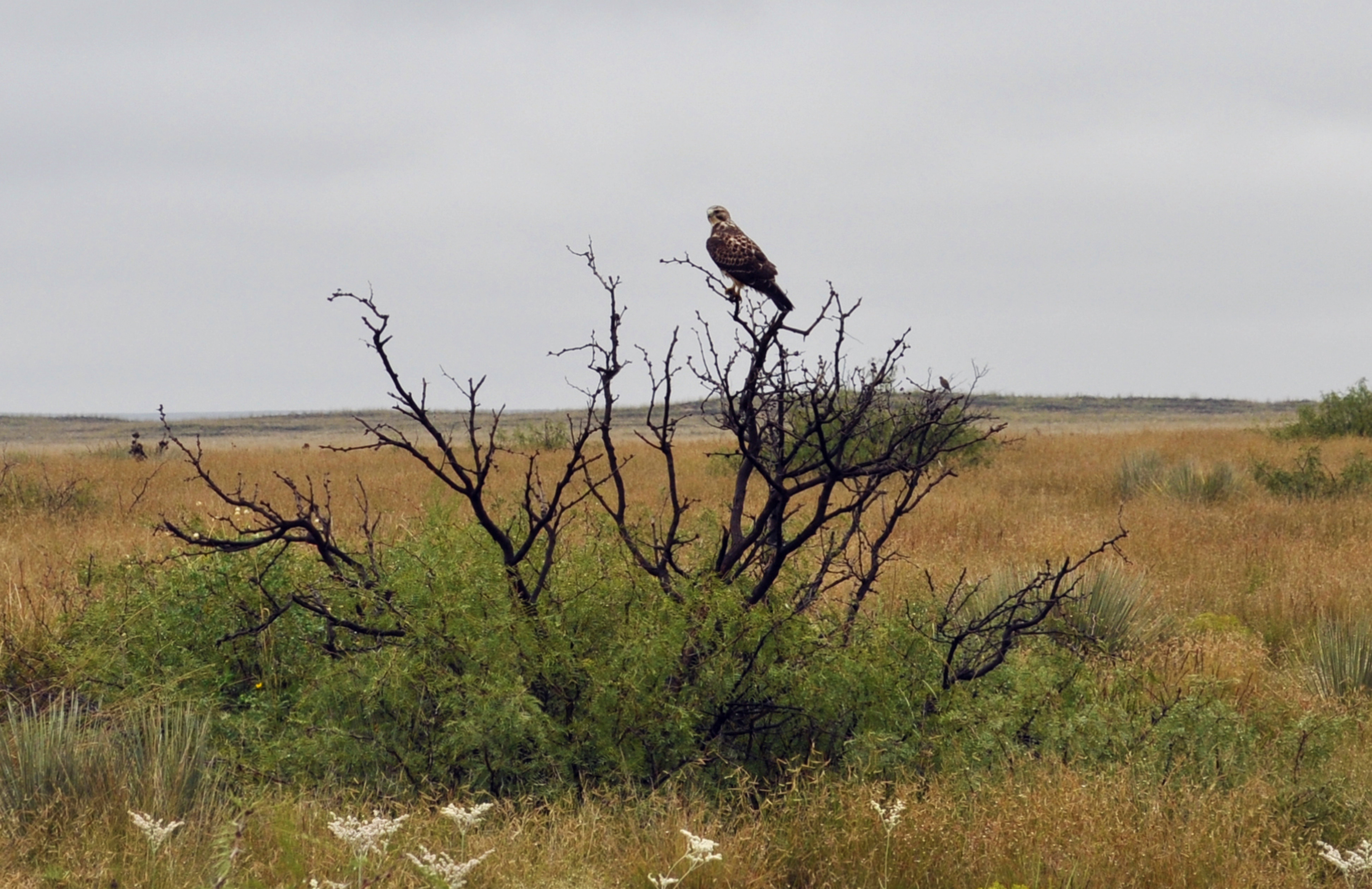
Within the lesser prairie-chicken’s range, predatory birds are more abundant in prairie grasslands with mesquite cover than in open grasslands.