Author Archives: Greg Peters

UPCOMING EVENT: Society for Range Management’s Annual Meeting, Technical Training & Trade Show


Mark Your Calendars— the Society for Range Management’s Annual Meeting is coming soon!

When: Jan. 29 to Feb. 2, 2017

Where: St. George, Utah

Description: Forums and workshops are designed to provide an opportunity for in-depth, interactive discussion of current and emerging topics of interest to the rangeland community.  The theme for the 2017 conference of the Society for Range Management (SRM)  is “Red Rock & Rangeland.” Click here to register or learn more.

On Tuesday, January 31, the conference will host an all-day symposium on recent research related to woody encroachment on grouse habitat in the Western US, including the issues of redcedar and mesquite encroachment on lesser prairie-chickens. The symposium will showcase recent research recently published in SRM’s on-line journal “Rangeland Ecology & Management–a special issue dedicated to studies related to reducing woodland expansion.

You can watch the symposium presentations live on the Sage Grouse Initiative website on  January 31, 2017. (We’ll post live-streaming details as they are finalized).

Hosted by Oregon State University’s Rick Miller, a 30+ year veteran of woodland expansion science topics, the full-day symposium will include 10 morning presentations covering history, ecology, and management of woodland expansion, along with 10 afternoon talks covering sage-grouse and lesser prairie-chicken response to woodland management.

Presentations will cover a range of woody encroachment topics, including songbird benefits from conifer removal, the effect of woody plants on soil water retention, the impacts of redcedar and mesquite encroachment on lesser prairie-chicken habitat occupancy, and a new mapping tool that will help range managers fine-tune management of encroaching woody plants.

Stay tuned for details on how to live-stream presentations or watch on-demand replays of the symposium.


Latest LPCI Videos Showcase Prescribed Grazing, Redcedar Treatment

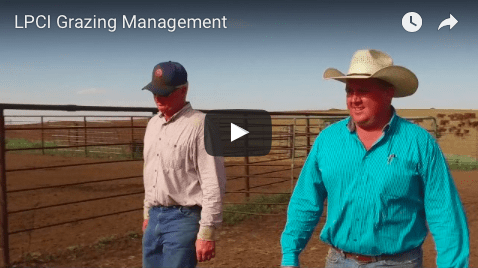
“There’s always been those numbers out there as far as stocking rate goes that have been a fly-by-the-seat-of-the-pants type of deal, but what NRCS’s technical support does is it brings some actual science into it.” That’s just one of the insights shared by Kansas rancher Russell Blew in a new 4-minute Lesser Prairie-Chicken Initiative (LPCI) video.

screen-shot-2016-12-19-at-9-03-53-amIf a picture’s worth a thousand words, a lively short video speaks volumes. LPCI’s Prescribed Grazing video is just one of a trio of new videos LPCI will use for education outreach to landowners, partner organizations, and the public. Also complete is a video on LPCI Redcedar Removal.  In both 4-minute videos, ranchers and LPCI field staff show and describe how these range management practices work and how they benefit both ranch operations and lesser prairie-chickens. The third video, on LPCI’s mesquite removal practice, will be released shortly.

Watch the LPCI Prescribed Grazing video.

Watch the LPCI Redcedar Removal video.

These videos are available for viewing on the LPCI YouTube Channel and Facebook page, as well as our website video gallery.

Thank you to Russell Blew, Martin Moore, and the many other ranchers who were willing to take the time to share their insights during the filming of our new videos.


JOB ANNOUNCEMENT: LPCI Seeks Graphic Design Services

The Lesser Prairie-Chicken Initiative (LPCI) seeks an experienced graphic designer(s) to support the LPCI Communications Program. LPCI requires graphic designers to work on a wide range of projects from simple design of postcards and flyers, to layouts for news articles and success stories, to designing brochures and reports.

Please see the Request for Proposals for full specifications. All inquiries regarding proposal submission may be directed to Sarah Marquart at 651-209-4920 or [email protected].  Proposals due by December 23.

NRCS to Expand Targeted Conservation Effort for Wildlife on Agricultural Lands

11 New Working Lands for Wildlife Projects Provide Opportunities for Producers to Restore, Protect Habitat

NEW FLORENCE, Missouri, Nov. 29, 2016 – From the northern bobwhite to trout and salmon, the U.S. Department of Agriculture (USDA) is adding dozens of new target species to its premier wildlife conservation effort that helps agricultural producers make wildlife-friendly improvements on working lands. USDA’s Natural Resources Conservation Service (NRCS) is adding 11 new projects to Working Lands for Wildlife (WLFW), the agency’s targeted, science-based effort to help producers restore and protect habitat for declining species on farms, ranches and working forests.

m13925_wlfw_projects

“Agriculture and wildlife both thrive together through landscape conservation,” said NRCS Chief Jason Weller, who toured a Missouri farm that has created young forest habitat to aid bobwhite and many other species. “Working Lands for Wildlife has delivered many unprecedented successes over the years, and we’re proud of our collective past achievements and look forward to continuing our work with America’s producers.”

With more than two-thirds of the continental United States under private ownership, bobwhite is one of many wildlife species that depend heavily on working lands for habitat and food. Projects focus on declining species that have needs compatible with agricultural practices and rural land management and that can benefit from conservation on private lands. Some of the new projects focus on one target species; others focus on a group of species. Projects include:

  • Northern Bobwhite in Grasslands, Virginia, Arkansas, Illinois, Indiana, North Carolina, Ohio, Missouri and Kentucky;
  • Northern Bobwhite in Pine Savannas, Georgia, New Jersey, North Carolina, South Carolina, Florida and Alabama;
  • Northeast Turtles, New Hampshire, Maine, Massachusetts, Rhode Island, Connecticut, New York and Vermont;
  • American Black Duck, Delaware, Maryland, Vermont and New Jersey;
  • Yazoo Darter, Mississippi;
  • Conasauga River Aquatic Species, Georgia and Tennessee;
  • Colorado River Aquatic Species, Texas;
  • Shorebirds of Louisiana Wetlands, Louisiana;
  • Cutthroat Trout, Colorado;
  • Sandhills Grasslands, Nebraska; and
  • Kenai Peninsula Salmon, Alaska.

When habitat is restored for these species, many others benefit. NRCS uses species as indicators of the health of the ecosystem at-large.

NRCS staff worked with conservation partners to identify new species and landscapes. Considerations included the compatibility of the species and agriculture, the network of available partners and the needs of the species.

Working Lands for Wildlife Conservation Model

wlfw_hf2-17So far, WLFW has helped producers restore 6.7 million acres of habitat for seven target species, such as the New England cottontail and greater sage-grouse. The U.S. Fish and Wildlife Service (FWS) determined last year that Endangered Species Act protections were not necessary for these species largely because of the voluntary conservation efforts on working lands.

“The future of wildlife, agriculture and rural ways of life depend on our collective ability to transfer our Working Lands for Wildlife model to more species and working landscapes,” Weller said.

Through WLFW, NRCS strategically invests where conservation returns are highest and measures how wildlife respond to management activities to refine conservation efforts.

Own or Manage Land? You Can Help.

NRCS provides technical and financial assistance to help producers adopt a variety of conservation practices on their land. NRCS staff help producers with a conservation plan and provide funding to cover part of the costs for adopting the practices. These practices are designed to benefit both the species and the agricultural operation.

By participating in WLFW, producers also receive regulatory predictability under the Endangered Species Act (ESA). Once enrolled, they may continue to implement their conservation efforts without fear of additional regulations.

To learn more about assistance opportunities, landowners should contact their local USDA service center.

FEATURED FRIEND: Meet the Bird Conservancy of the Rockies

screen-shot-2016-10-27-at-1-46-26-pm

Meet the Bird Conservancy of the Rockies, one of LPCI’s partner organizations. The Bird Conservancy plays a vital role in the scientific research that helps LPCI ensure that we’re doing the right things in the right places to benefit lesser prairie-chickens.

Download the pdf of our latest Featured Friend story.

LPCI succeeds through the combined resources and know-how of many public agencies, nonprofit organizations, universities, and private businesses. Our partners expand LPCI’s field delivery, science, and communications capacity. 


Research Helps Fine-Tune Conservation Efforts

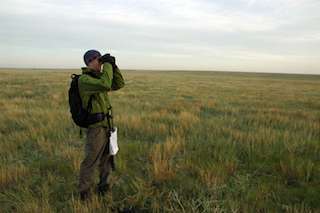
How do we know if habitat conservation efforts are really helping lesser prairie-chickens and other species? Through on-the-ground research. In 2016, Bird Conservancy of the Rockies completed its eighth field season of breeding bird surveys on public and private land across the western US. Their survey, known as the Integrated Monitoring in Bird Conservation Regions (IMBCR) program, is one of the largest breeding bird monitoring studies in North America.

matt-gracey-conducting-point-count_by-taylor-barnes-copy-2

“By working with people and combining science and stewardship, we can ensure the right practices are delivered in the right places to benefit multiple grassland bird species including lesser prairie-chicken.” ~Tammy VerCauteren, Executive Director

Through IMBCR, LPCI and Bird Conservancy of the Rockies have teamed up to survey private ranches in the southern Great Plains to investigate the impact of LPCI conservation practices. Preliminary findings show that species richness of grassland-obligate songbirds was greater in LPCI landscapes than non-LPCI, and that species richness correlated with lesser prairie-chicken occupancy.

Additionally, findings from their on-going research— including a 2016 report that showed considerable positive effects of prescribed grazing and Conservation Reserve Program enrollment on lesser prairie-chicken habitat occupancy—helps LPCI fine-tune management strategies to deliver the greatest conservation return on investment, provide predictability for conservation actions, and ensure mutually beneficial solutions for landowners and wildlife.

hoemeranch_workshop-copy

Landowner workshop on birdfriendly range management practices, Scott City, KS.

“Bird Conservancy aims to conserve species of concern through meaningful relationships with the private landowners who work those landscapes,” says Adam Beh, Bird Conservancy stewardship director. “Landowners are essential to the research by allowing field technicians access to their land—Bird Conservancy is deeply thankful to these committed landowners.”

About the Bird Conservancy

PrintBird Conservancy of the Rockies conserves birds and their habitats through an integrated approach of science, education, and land stewardship. Their work spans from the Rockies to the Great Plains, Mexico, and beyond. Their mission is advanced through sound science, achieved through empowering people, realized through stewardship, and sustained through partnerships.

Contact

Adam Beh, Stewardship Director  |  970-482-1707 ext 12  |  [email protected]  www.birdconservancy.org

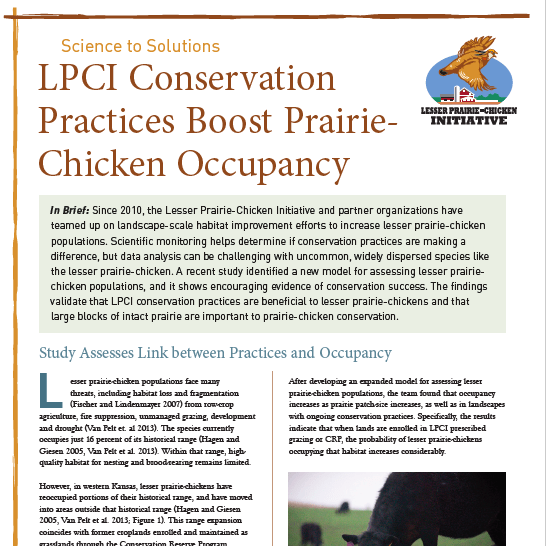
SCIENCE TO SOLUTIONS: LPCI Conservation Practices Boost Lesser Prairie-Chicken Occupancy

Habitat conservation practices make a difference for lesser prairie-chickens. That’s the finding of a recent scientific study—the first part of a multi-year study—described in a new report from the Lesser Prairie-Chicken Initiative (LPCI).

LPCI, led by USDA’s Natural Resources Conservation Service (NRCS), works with partner screen-shot-2016-10-17-at-10-52-52-amorganizations and ranchers to improve habitat and address threats to the bird. Since 2010, more than 1 million acres of habitat in the southern Great Plains have been restored on working lands.

NRCS works with partners to monitor the outcomes of targeted assistance to private landowners, which helps determine if LPCI’s conservation practices are making a difference. However, accurately estimating wildlife populations be challenging with uncommon, widely dispersed species like the lesser prairie-chicken.

A recent study identified a new model for assessing lesser prairie-chicken populations, and it shows encouraging evidence that NRCS-recommended conservation practices through LPCI are working and that large blocks of intact prairie are important to prairie-chicken conservation.

Download the new Science to Solutions report.

The study assessed one year of data from the annual aerial survey of lesser prairie-chicken lek sites conducted by the Western Association of Fish and Wildlife Agencies, and it looked at four factors that might impact site occupancy—patch size of native vegetation, percent of land cover managed with prescribed grazing; percent of land cover enrolled in the USDA’s Conservation Reserve Program (CRP); and density of primary roads. The research team intends to continue with a multi-year study that assesses additional variables.

Lesser prairie-chickens face many threats, including habitat loss and fragmentation from row-crop agriculture, fire suppression, unmanaged grazing, development, and drought. The species currently occupies just 16 percent of its historic range.

2015-survey-grid-lowres-copy

Map of current and historical range of the lesser prairie-chicken, showing sites surveyed during the 2013 range-wide aerial survey. The data from this survey was repurposed to assess LEPC habitat occupancy. (Click on map for larger view).

But in western Kansas, lesser prairie-chickens have reoccupied portions of their historical range and have even moved into areas outside that historical range. The range expansion coincides with former croplands enrolled and maintained as grasslands through CRP, as well as native grasslands managed using LPCI prescribed grazing practices.

A team of researchers tested whether there was a quantifiable link between land managed with prescribed grazing or enrolled in CRP and the likelihood of prairie-chickens occupying a landscape. Their results indicate that these habitat conservation efforts are working.

After developing an expanded model for assessing lesser prairie-chicken populations, the team found that occupancy increases as prairie patch-size increases, as well as in landscapes with ongoing conservation practices. Specifically, the results indicate that when lands are using prescribed grazing or enrolled in CRP, the likelihood of lesser prairie-chickens occupying that habitat increases significantly.

The report’s management recommendations include:

  • Enrolling acreage within the lesser prairie-chicken active range in prescribed grazing or CRP.
  • Maintaining large blocks of native prairie across the range through sustainable ranching.
  • Identifying potential landscapes with willing landowners to develop conservation easements, particularly if combined with prescribed grazing and other proven habitat conservation practices.
  • Implementing prescribed grazing on dispersed patches throughout large blocks of rangeland.
  • Cultivating diverse stands of CRP-enrolled grasslands that serve as connective tissue to larger patches of native prairie.
  • Retaining CRP acreage as grasslands after contract expiration.
Lesser prairie-chickens benefit from LPCI prescribed grazing. The study showed strong positive relationship between percent prescribed grazing and probability of occupancy.

Lesser prairie-chickens benefit from LPCI prescribed grazing. The study showed strong positive relationship between percent prescribed grazing and probability of occupancy.

NRCS outlined its three-year plan for lesser prairie-chicken conservation in its Lesser Prairie Chicken Initiative FY16-18 Conservation Strategy report, which encourages adoption of many of the above practices—such as prescribed grazing, using easements to protect key habitat corridors, and providing assistance to convert expiring CRP lands to grazing—on 500,000 additional acres.

Learn more about these findings by downloading the new Science to Solutions report. This report is part of the Science to Solutions series offered through NRCS, LPCI and the Sage Grouse Initiative.


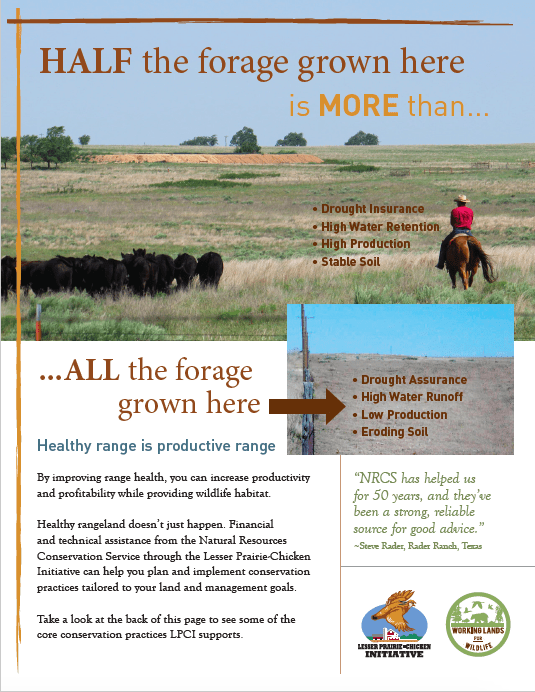
New Flyer Links Range Health and Productivity, LPCI Assistance

screen-shot-2016-10-17-at-9-25-34-amHealthy range is productive range. That’s the simple message in our latest outreach flyer for private landowners in the southern Great Plains. When landowners adopt habitat conservation practices that benefit lesser prairie-chickens, the land responds in ways that benefit wildlife and ranch operations. And through the Lesser Prairie-Chicken Initiative, there’s both technical and financial assistance available to make that happen.

View the flyer

The flyer describes five core conservation practices supported by LPCI that improve the range for both screen-shot-2016-10-17-at-9-25-51-amwildlife and cattle: Prescribed grazing, drought contingency planning, conversion of expired
Conservation Reserve Program acreage to grazing, woody plant removal, and prescribed fire.

Getting that message to landowners in the LPCI action area is critical. Take a look at the flyer, and share it!


New study measures fence collision mortality, informs conservation

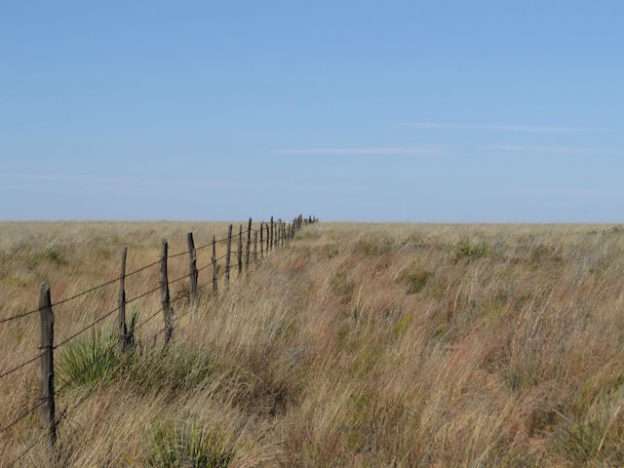
Do barbed-wire fences pose a threat to lesser prairie-chickens? A recent study of more than 1,700 miles of livestock fences in Kansas and Colorado found little evidence of fence collision mortality. The study helps create a more detailed picture of threats to the lesser prairie-chicken populations across their range.

For resource managers working to conserve lesser prair0069amyerickson-copyie-chickens, it’s critical to accurately
identify threats and develop effective practices to address them. Scientific studies help provide the data that can help focus effort and funding on those practices that have a clear and significant positive effect.

Until recently, scientific data related to lesser prairie-chicken conservation has been limited. In recent years, however, as the range-wide population of this once-abundant prairie grouse dropped to historic lows, an unprecedented research effort has been underway to better understand the ecology, threats, and effective conservation of this species.

One of the overarching revelations of the emerging research is that threats and conservation strategies can vary across the prairie-chicken’s range. Effective management needs to accommodate and respond to these variations. Mortality due to fence collisions appears to be one such varying threat, perhaps corresponding with variations in fence density.

Like its cousin, the greater sage-grouse, the lesser prairie-chicken is a relatively low-flying bird, particularly when flushed. Many, though not all, research studies have shown that, for sage grouse, fences pose a significant threat and that fence-marking with vinyl tabs can reduce that mortality by more than 80%.

For lesser prairie-chickens, research has yielded less conclusive results. Several studies sampling various parts of the lesser prairie-chicken’s range in Kansas, Texas, Oklahoma, and New Mexico showed little or no fence-related morality. One study in Oklahoma showed high mortality related to fence collision. No studies have yet assessed the effectiveness of markers in reducing prairie-chicken mortality.

The new fence collision study, led by biologist Samantha Robinson of Kansas State University, came down conclusively on the side of minimal mortality from fences. Both by surveying fence lines and by tracking radio-marked birds, the research team found little fence-collision risk.

0268davidhaukosSpecifically, the research team documented only 1 fence-collision mortality in more than 12,700 recorded fence crosses by radio-tagged birds. During fence surveys, they found 3 carcasses that bore evidence of predator-related death. They also found 12 sites of potential collisions (dropped feathers), but could not conclusively document mortality of any lesser prairie-chicken due to a fence collision.

So how does this study help inform lesser prairie-chicken conservation practices? Current management recommendations for the species focus on the studies that indicated a significant threat from fence collision. Because of that, federal agencies like the Natural Resources Conservation Service, which leads the Lesser Prairie-Chicken Initiative, have required and provided financial assistance to mark and/or remove fences as part of conservation management planning.

Read the fence collision research report.

The report from Robinson’s team suggests that, given the low incidence of fence collisions for prairie-chickens in low-density fence areas (< 2 km of fence per km2), marking fences in such areas uses resources that could be more effectively applied to improving the quality and quantity of prairie habitat.

“Hopefully given the results of this study, the time and money invested in marking fences can be refocused to grassland management and protection and restoration of farms and ranches,” said Robinson.

The team additionally recommended that land managers aim to maintain low fence densities to avoid increasing risk to lesser prairie-chickens, such as what is found in Oklahoma.

Landowners Offer Ideas for Improving Habitat Conservation Assistance

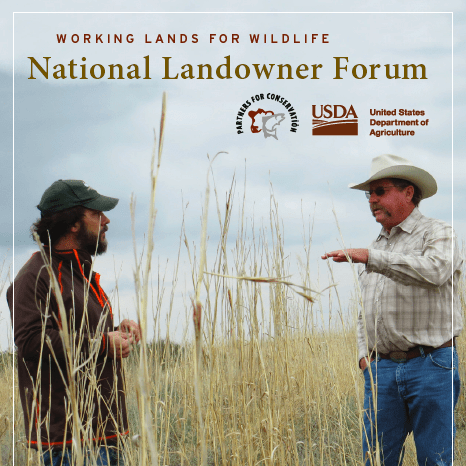
In May 2016, 26 private landowners from across the country met in Denver, Colorado, to talk with Natural Resources Conservation Service (NRCS) staff about what is working in the Working Lands for Wildlife partnership and what opportunities exist for improvement. Their insights are captured in a recently released report, National Landowner Forum: Perspectives and Recommendations.

Screen Shot 2016-08-01 at 8.31.01 AMJointly coordinated by Partners for Conservation and NRCS, and including funding support from the Intermountain West Joint Venture, the 2-day meeting provided a forum to share stories of both successes and challenges in carrying out the vision of WLFW conservation assistance.

The participants had five primary recommendations for expanding and improving Working Lands for Wildlife:

  • Demonstrate need and build support for increased conservation technical assistance.
  • Promote effective communication with landowners, NRCS staff members, and partners regarding Working Lands for Wildlife.
  • Work on tools and techniques beyond communications that will help build relationships and partnerships at the local and regional levels.
  • Develop the concept of flexibility in programs, practices, relationships, and partnerships in order to advance Working Lands for Wildlife as an approach.
  • Help partners to identify the overall plan and vision for a landscape or focal species that will motivate participation and foster greater accountability.

The report notes that an overwhelming message that resonated throughout the forum was the importance of effective communication. As one of the initiatives within the Working Lands for Wildlife programs, the Lesser Prairie-Chicken Initiative is taking these recommendations to heart.

Over the coming months, we’ll be working on expanding communications with field staff, landowners, and partnering organizations to fine-tune our message and increase participation in the voluntary habitat conservation practices that make a real difference for both lesser prairie-chickens and agricultural producers. As always, we welcome any feedback you may have.


U.S. Fish and Wildlife Service Delists Lesser Prairie-Chicken in Accordance with Court Order

The U.S. Fish and Wildlife Service (FWS) yesterday fulfilled a court ruling that had vacated its Endangered Species Act (ESA) listing decision, by officially removing the lesser prairie-chicken from the Federal List of Endangered and Threatened Wildlife.

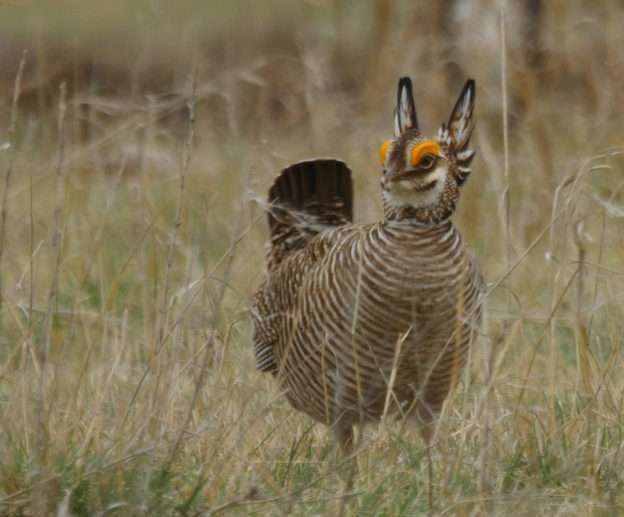
Lesser prairie-chicken (photo Jeremy Roberts, Conservation Media)

Lesser prairie-chicken (photo Jeremy Roberts, Conservation Media)

According to the FWS, this administrative action and the decision not to appeal the court’s ruling do not constitute a biological determination on whether or not the lesser prairie-chicken warrants federal protection. The Service is undertaking a thorough re-evaluation of the bird’s status and the threats it faces using the best available scientific information to determine anew whether listing under the ESA is warranted.

“The storied prairie landscape of the Southwest is of tremendous economic and cultural importance. It is also a critical area for the birds, mammals, reptiles and other animals that rely on this unique habitat,” said Service Director Dan Ashe.

“Responding to this court ruling by removing the bird from the Federal List does not mean we are walking away from efforts to conserve the lesser prairie-chicken. Far from it,” Ashe said. “We are undertaking a new status review to determine whether listing is again warranted, and we will continue to work with our state partners and others on efforts to protect vital habitat and ensure this flagship of the prairies survives well into the future.”

On June 9, 2014, the Permian Basin Petroleum Association and several New Mexico counties filed a lawsuit challenging the Service’s 2014 listing of the lesser prairie-chicken as a threatened species under the ESA. In September 2015, the court ruled in favor of the plaintiffs and vacated the final listing rule, effectively ending ESA protections for the bird.

The ruling had the effect of also invalidating the Service’s rule under section 4(d) of the ESA that tailored the regulations governing take of the species under the ESA to focus on those activities that are threats to the species’ survival.

Despite the ruling, the Service continues to engage in a number of major initiatives to conserve lesser prairie-chicken populations, including the Service’s Partners for Fish and Wildlife program, the Lesser Prairie-Chicken Range-wide Conservation Plan developed and administered by the Western Association of Fish and Wildlife Agencies, and the NRCS-led Lesser Prairie Chicken Initiative (LPCI).

According to LPCI Coordinator Jon Ungerer, the delisting will not affect the LPCI partnership’s strong commitment to improving habitat for lesser prairie-chickens.

“LPCI will continue to provide technical and financial assistance to landowners interested in voluntarily improving grassland health using proven conservation methods.” said Ungerer.

Once abundant across much of the five range states of Texas, New Mexico, Oklahoma, Kansas and Colorado, the lesser prairie-chicken’s historical range of native grasslands and prairies has been reduced by an estimated 84 percent.

Lesser prairie-chicken populations need large tracts of intact, high-quality prairie to survive and reproduce. As such, the lesser prairie-chicken serves as a key indicator of the health of native grasslands, which support regional ranching economies and many native wildlife species, such as migratory birds, scaled quail, pronghorn and mule deer.