Author Archives: Greg Peters

New LPCI Video Spotlights Conservation Reserve Program

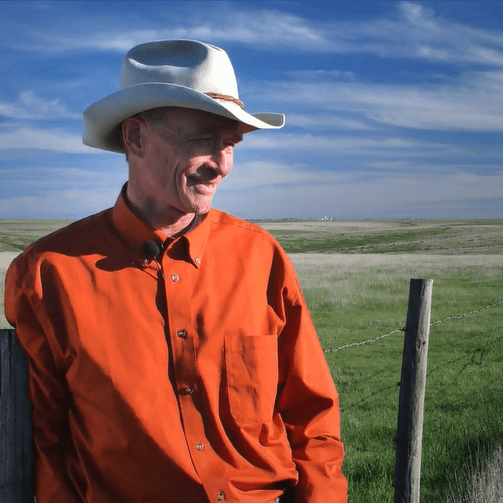
How does the Conservation Reserve Program benefit lesser prairie-chickens and the private landowners who steward their habitat? A newly released 3-minute video from Lesser Prairie-Chicken Initiative answers that question. Fourth-generation rancher Dwight Abell and LPCI science advisor Christian Hagen offer their insights into the many positive impacts of CRP for both wildlife and land stewards.

AbellRanch,playbutton


Watch the video

New Study Affirms Lesser Prairie-Chicken Research Practices

The results provided in this study, combined with data provided by Hagen et al. (2006), suggest researchers can trap and handle this threatened species without measurable negative effects to individuals if birds are immediately removed from traps, the number of consecutive trapping days on an individual lek are minimized (7–10 d), the position and location of the traps on the lek of capture is rotated every 2–4 d, and researchers use active trapping techniques to target individuals.

–from “Evaluation of Capture Techniques on Lesser Prairie-Chicken Trap Injury and Survival,” by B. Grisham et al.

FB0260(BlakeGrisham)

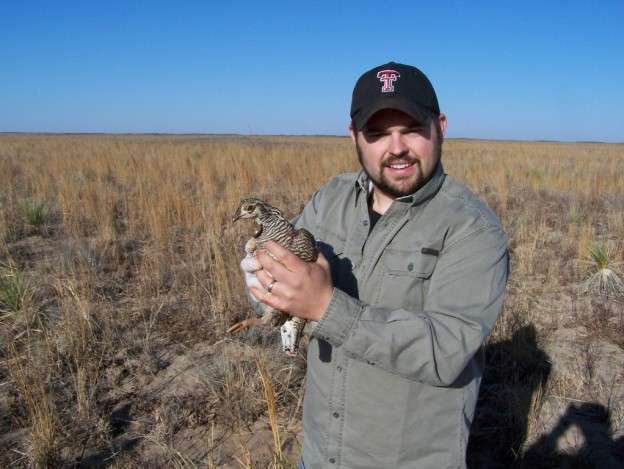
Dr. Blake Grisham holds a radio-tagged lesser prairie-chicken (photo courtesy Blake Grisham).

Led by Dr. Blake Grisham of Texas Tech, a research team has published  a study in the Journal of Fish and Wildlife Management that demonstrates that the research activities of capture and radio-tagging do not negatively influence the survival of lesser prairie-chickens.  Done properly, these research techniques offer an important, proactive tool to improve lesser prairie-chicken habitat conservation and management.

Researcher approaches prairie-chickens captured in funnel trap.

Researcher approaches lesser prairie-chickens captured in funnel trap (photo courtesy David Haukos).

In their study, “Evaluation of Capture Techniques on Lesser Prairie-Chicken Trap Injury and Survival,” researchers looked at the effects of trapping more than 400 lesser prairie-chickens from 2006 to 2012 via funnel traps, rocket nets, and drop nets. Based on the team’s findings, the paper offers  recommendations to researchers to minimize potential injuries during field work.

Read the full study (Click the link “PDF” that appears near the top of the page, above the article citation.)

Texas Rancher Creates Haven for Lesser Prairie Chickens

(This story originally appeared on the blog of the Farm Service Agency, an LPCI partner.)

James Blackwell is a third-generation landowner and nature lover in Littlefield, Texas, which lies northwest of Lubbock in the southern reaches of the panhandle. His 2,500 acres straddle Lamb and Hockley counties, a one-time Dust Bowl region. When the USDA introduced its Conservation Reserve Program (CRP) 30 years ago, Blackwell jumped at the chance to do his part. Since the beginning, he has gone the extra mile to protect and nurture local wildlife and plants.

Blackwell initially set aside 180 acres for conservation efforts in 1986, the beginning of CRP. He established an area of suitable grasses in which the lesser prairie-chicken could thrive. Since then he has gone much further to help conserve local wildlife. The move has in turn helped his land.

Over the years, Blackwell added 680 acres of established cover. Acting on his belief in the value of using local seed, he transitioned 360 acres from introduced grass species to native grasses. The extra effort paid off when he saw growth in the lesser prairie-chicken population. But he didn’t stop there.

Blackwell added four acres of a wildlife food plot and performed annual seeding to ensure further growth in both local grasses and the lesser prairie-chicken population.  He then set up dirt tanks—a Texas term for small man-made ponds—in three areas, filled by windmills. Ducks return every year to nest.

James Blackwell, a third-generation Texas landowner, has participated in the Conservation Reserve Program (CRP) since 1986.

James Blackwell, a third-generation Texas landowner, has participated in the Conservation Reserve Program (CRP) since 1986.

More recently, Blackwell installed water guzzlers—apparatus that catch and hold rain—to provide water where it is scarce. He performed prescribed burns to clear undesirable grasses and shrubs.

His efforts have reached beyond his fence line. Blackwell encourages neighbors to help with conservation efforts. Now, about 1,000 acres near his land is managed to benefit wildlife.

“I wanted to help local wildlife and repair land that became unfit for cultivation because of erosion,” said Blackwell. “These practices have helped the wildlife tremendously…. Mule deer are coming in and the quail population has been re-established. That’s beyond the fact that the practices also stopped erosion.”

Blackwell has been doing his part in CRP for 30 years, but he says he has no intention of slowing his efforts. He knows it’s good for everyone.

“I will continue conservation practices as long as I am alive,” said Blackwell. “It stops sand from blowing around the land, prevents erosion, and attracts wildlife. We want to provide an environment where people can enjoy the outdoors.”

Blackwell says conservation work is a family effort. He says he hopes to pass on sound conservation practices to the next generation.

CRP is a voluntary program that allows eligible landowners to receive annual rental payments and cost-share assistance to establish long-term, resource-conserving covers on eligible farmland throughout the duration of their 10-to-15-year contracts.

Since being established on December 23, 1985, CRP has helped prevent more than 8 billion tons of soil from eroding and protected more than 170,000 stream miles with riparian and grass buffers, more than 100,000 acres of bottomland hardwood trees, nearly 300,000 acres of flood-plain wetlands, and 250,000 acres each for duck nesting habitat and upland bird habitat.

2015 marks the 30th Anniversary of CRP. For an interactive tour of CRP success stories from across the U.S., please visit the FSA CRP 30th Anniversary website.

Find your local USDA Service Center.

New England Cottontail: Another Success Story for Proactive Voluntary Conservation

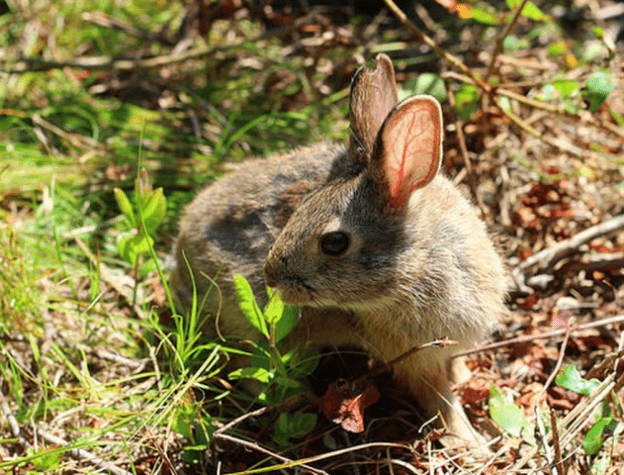
Landowners on the East Coast brought about a major success today with their voluntary conservation efforts for the New England cottontail. U.S. Secretary of the Interior Sally Jewell announced that foresters and farmers have helped prevent the need to list the New England cottontail under the Endangered Species Act.

New England Cottontail

New England Cottontail

This partnership is three-quarters of the way to their goal of 13,500 cottontails in healthy, young forest landscapes. To date, 4,400 acres have been restored on private lands through the voluntary removal of trees and invasive species, planting of native shrubs and brush pile creation. Like the lesser prairie-chicken, the New England cottontail is one of seven species under the Natural Resources Conservation Service (NRCS) umbrella initiative called Working Lands for Wildlife (WLFW).

“The decision not to list the New England cottontail shows that wildlife and working lands cannot just coexist, but thrive, in harmony,” said Jason Weller, NRCS Chief. “USDA is proud of the private landowners who stepped forward to make proactive conservation improvements on their land, restoring critical habitat for this unique rabbit.”

Today’s announcement re-emphasizes the role of voluntary and proactive conservation for enacting positive change to benefit working lands and wildlife. This announcement follows a similar decision last April when voluntary measures precluded the need for the Service to list the genetically distinct population of sage grouse in the Bi-state region. The nation’s landowners—farmers, ranchers and forest managers—provide not only food and fiber for the world but also include a variety of environmental benefits, including habitat for wildlife. These people are our crucial partners in conservation.

The Service’s official “not warranted” for listing finding on the cottontail will be published in the Federal Register on Tuesday.

Conservation Reserve Program accepting more acreage for LPC habitat

U.S. Department of Agriculture (USDA) recently announced increases in the acreage of agricultural lands eligible for funding through one of its wildlife habitat restoration programs. The program, known as State Acres for Wildlife Enhancement (SAFE) is an initiative within the Conservation Reserve Program (CRP).

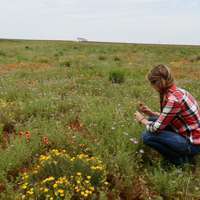
LPCI wildlife biologist Megan Waechter studies CRP grassland.

LPCI wildlife biologist Megan Waechter studies CRP grassland.

The USDA Farm Service Agency (FSA) administers CRP and its SAFE program, and NRCS provides technical support to enrolled landowners. The Texas FSA office announced a 27,300-acre increase, and Kansas FSA announced a 55,000-acre increase (click links to read state funding announcements).

If you are a farmer or rancher in the five-state lesser prairie-chicken range, contact your local USDA/FSA office to determine whether you are located in a designated SAFE-eligible area.

CRP uses Farm Bill funding to provide annual rental payments to agricultural landowners to establish grassland cover on sensitive agricultural lands to reduce erosion, improve water quality, and establish wildlife habitat. The State Acres for Wildlife Enhancement (SAFE) program is a subset of CRP specifically targeted to significant natural resource landscapes and associated benefits, including threatened species like the lesser prairie-chicken. SAFE offers incentive payments for new enrollments, annual acreage rental payments, and cost-share funding.


Patch Burn Grazing Annual Meeting, August 26-28

The Patch Burn Grazing Annual Meeting has come to lesser prairie-chicken country! Two outstanding ranch operations whose stewardship practices are making a real difference for lesser prairie-chickens are the featured field tour sites for the upcoming meeting, to be held August 26-28, 2015, in Pratt, Kansas.

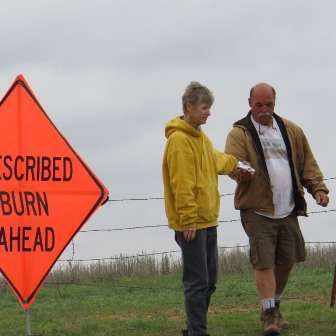
Ed Koger of the Hashknife Ranch lights a perimeter fire. April, 2015.

Ed Koger of the Hashknife Ranch lights a perimeter fire. April, 2015.

Download the Program Schedule (pdf)

On August 27, meeting participants will tour Ed Koger’s Hashknife Ranch, where Ed has been conducting prescribed burns since 1977, and utilizing patch burn grazing for a decade, with outstanding results for both wildlife and forage production.

038FB

Eva and Keith Yearout, managers of the Z-Bar Ranch, help neighbors conduct a prescribed burn. April, 2015.

On August 28, participants have the opportunity to join a tour of the Z-Bar Ranch, where ranch managers  Eva and Keith Yearout steward grasslands following principles of pyric herbivory, with bison as the primary grazers.

The meeting will include:

  • equipment expo (pre-meeting 25, and 26)
  • presentations (26th)
  • tour of the Hashknife Ranch (27th)
  • optional tour of the Z-bar ranch (Turner Enterprises) (28th)

According to the Great Plains Fire Science Exchange, which is hosting the event, this meeting is a great fit for producers, grassland ecologists, researchers, graduate students, fire ecologists, and the general public interested in the interactions of fire and grazing with plants, wildlife, soils, and more.

Register for the meeting.

A limited number of travel stipends are available for non-federal employee attendees.

New Mapping Tool Shows Woody Encroachment in LPC Habitat

Researchers from the University of Minnesota, in partnership with the Natural Resources Conservation Service Conservation Effects and Assessment Program (CEAP), have completed an assessment of woody encroachment in the Southern Great Plains that will aide lesser prairie-chicken conservation.  Their data informs a new mapping layer in the on-line Crucial Habitat Assessment Tool (CHAT) map—an important habitat management tool for grassland resource managers.

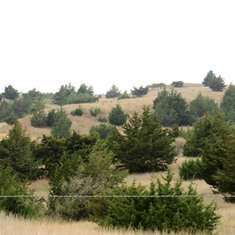
cedarencroachment

Eastern redcedar encroachment in southwest Kansas.

Funded by CEAP, the NRCS-led Lesser Prairie-Chicken Initiative, and Kansas University, the project maps the extent and canopy cover of woody encroachment across the lesser prairie-chicken’s five-state range, which encompasses portions of Colorado, Kansas, Oklahoma, Texas, and New Mexico.

Two species are responsible for most woody encroachment in the Southern Great Plains—eastern redcedar on the east side of the range and mesquite on the west side. Historically, regularly occurring fire killed off woody plants on the Plains, maintaining prairie grasslands.

Since settlement, fire suppression has allowed redcedar and mesquite to encroach onto grasslands, degrading habitat for grassland wildlife and reducing forage base for livestock grazing. Researchers estimate that redcedar is encroaching at the rate of more than 275,000 acres per year.

The new mapping layer will provide a broad-scale planning tool for resource managers to more effectively target habitat improvement strategies.  Because it identifies five levels of canopy cover, from low to high percentage, it also enables cost-benefit analyses for woody plant removal. It will also serve field staff working one-on-one with agricultural producers, offering a starting point for management planning, followed up by on-the-ground site assessment.

Access the new mapping layer at https://www.sgpchat.org/. Turn on the woody encroachment mapping layer by clicking the box next to “Percent Conifer/Mesquite” near the bottom of the layers list.


Aerial survey shows 25% increase in lesser prairie-chicken population

Abundant spring rainfall, along with ongoing conservation efforts, has helped increase lesser prairie-chicken populations approximately 25 percent from 2014 to 2015, according to results from the annual range-wide aerial survey.

The total lesser prairie-chicken population now numbers about 29,000 birds, according to Bill Van Pelt, grasslands coordinator for the Western Association of Fish and Wildlife Agencies (WAFWA), which commissioned the survey.

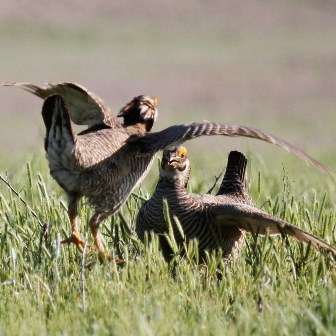
Males displaying on a lek in western Kansas. Courtesy of David Haukos.

Males displaying on a lek in western Kansas. Courtesy of David Haukos.

Researchers observed increases in three of four of the bird’s ecoregions across five states—Colorado, Kansas, New Mexico, Oklahoma and Texas. The Sand Sage Prairie Region of southeast Colorado showed the biggest gain, with numbers up approximately 75 percent from a year ago. The Mixed Grass Prairie Region of the northeast Panhandle of Texas, northwest Oklahoma and south central Kansas saw a roughly 30 percent increase, and the Shortgrass Prairie Region of northwest Kansas population grew by about 27 percent.

“An overall 25 percent increase in the lesser prairie-chicken population across its five-state range is welcome news,” said Ross Melinchuk, chairman of the WAFWA Lesser Prairie-Chicken Initiative Council.

WAFWA coordinates efforts established under the Lesser Prairie-Chicken Range-wide Conservation Plan, an initiative to engage private landowners and industry to conserve the bird’s habitat and minimize impacts to the species.

Melinchuk expressed optimism about the species’ recovery. “This year’s increase, on the heels of last year’s 20 percent increase, is evidence of the species’ ability to rapidly recover from downturns as a result of drought and poor range condition.”

Jon Ungerer, coordinator of the Natural Resources Conservation Service’s Lesser Prairie-Chicken Initiative (LPCI), agrees. “We’re encouraged by these numbers. The kind of drought we’ve just gone through is hard on wildlife and producers. Plentiful rain was critical to the recovery. Much of the credit also goes to many landowners who implemented conservation strategies that helped the range rebound quickly.”

Ungerer explains, “Range management plans with sound drought-contingency strategies decrease the effects of drought, resulting in quicker recovery of the forage and habitat needed by producers and wildlife alike.”

Launched by NRCS in 2010, the LPCI partnership offers financial and technical assistance to agricultural producers to implement range management practices that benefit lesser prairie-chicken habitat and ranch operations. WAFWA and NRCS collaborate closely through LPCI and the Range-wide Conservation Plan to provide assistance to private landowners, develop conservation plans, and monitor range health.

The only ecoregion with a continued downward lesser prairie-chicken population trend is the Shinnery Oak Region of eastern New Mexico and western Texas. This ecoregion is recovering from a prolonged period of drought. Recent roadside surveys indicate lesser prairie-chickens in this area are starting to respond to late 2014 and early 2015 rainfall.

“We’re confident that with continued moisture and drought relief, next year’s shinnery oak populations should continue to recover,” said WAFWA’s Van Pelt.

To date, industry partners have committed $46 million in enrollment and mitigation fees to WAFWA to pay for mitigation actions, and landowners across the range have agreed to conserve nearly 100,000 acres of habitat through 10-year and permanent conservation agreements.

NRCS investments of more than $20 million leveraged additional partner funding, resulting in over $25 million in on-the-ground habitat conservation practices. Through LPCI, more than 500 private landowners have enrolled almost 1 million acres in voluntary range-enhancement programs.

The lesser prairie-chicken was listed as threatened under the Endangered Species Act in May 2014. The final listing rule allowed private industry to develop and impact habitat if enrolled and participating in WAFWA’s range-wide plan, and it also provided various options that landowners can use to receive similar coverage.

The range-wide plan provides incentives for landowners and industry to protect and restore habitat, which is critical since they own and manage some 95% of the bird’s range. Farmers and ranchers may still enroll in LPCI and WAFWA conservation contracts and receive regulatory assurances for their agricultural operations.

For information on enrolling your land, contact your local USDA/NRCS office. For more information on WAFWA, including the range-wide plan, visit www.wafwa.org. Learn more about LPCI at www.lpcinitiative.org.

Range-wide Research Effort Sheds Light on Lesser Prairie-Chickens

This excellent feature story in Science Magazine describes the unprecedented, range-wide research effort aimed at understanding lesser prairie-chicken habits, needs, and threats. The research push involves nearly a hundred researchers involved in some three dozen distinct research projects at regional universities.

Read the full Science article.

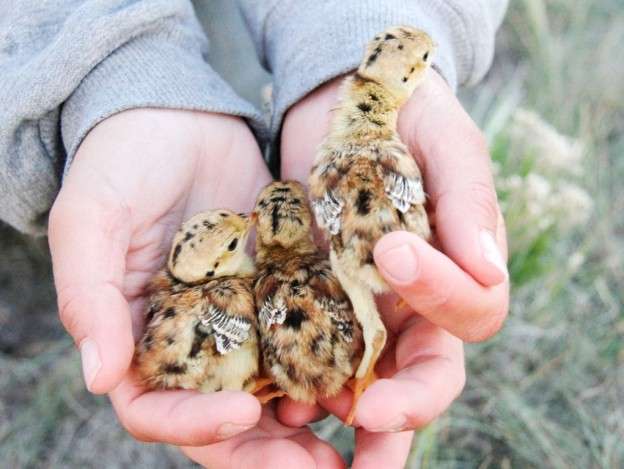
Three young lesser prairie-chicken chicks. Photo courtesy David Haukos, Kansas State University

Three young lesser prairie-chicken chicks. Photo courtesy David Haukos, Kansas State University.

Rancher Weathers Drought with LPCI Conservation Assistance

by Sandra Murphy, LPCI communications specialist

On a late April morning in southwest Kansas, sand bluestem sways over rancher Bill Barby’s head. A medley of other native grasses — little bluestem, sand lovegrass, and prairie sandreed, and more — fill the pasture around him, providing food for his cattle as well as habitat for the lesser prairie-chicken, a threatened species.

Bill Barby stands in a field he had burned a year ago, overlooking a neighboring pasture where his cattle graze.

Bill Barby stands in a field he had burned a year ago, overlooking a neighboring pasture where his cattle graze.

Despite the abundance of grass these days, Barby can easily recall the devastating drought that recently gripped the Southern Great Plains and brought forage production to a standstill.

“In 2011, I lost most of my sand lovegrass and some of my little bluestem,” he said. “It was a shock to have that die.”

During the worst two years of the drought, 2011 and 2012, temperatures soared to record highs. Rainfall plummeted — in some areas to the lowest levels in more than a century. Record numbers of wildfires burned, crops and pastures withered, streams ran dry, wildlife populations dwindled, trees died, and dust storms darkened the sky.

“It was a tough couple of years to be a prairie grass, let alone a prairie-chicken,” said Christian Hagen, science adviser for the Lesser Prairie-Chicken Initiative (LPCI). The partnership, led by USDA’s Natural Resources Conservation Service, leverages Farm Bill funds to help ranchers and farmers voluntarily enhance lesser prairie-chicken habitat while improving the long-term sustainability of their agricultural operations.

LPCI field staff work one-on-one with ranchers to develop a grazing plan that supports thier cattle operation as well as providing habitat for wildlife like prairie-chicken. The plan identifies strategies to build grassland health and resiliency so that the vegetation is better able to survive drought, and it lays out a course of action to follow when a drought occurs.

When Barby acquired this 4,000-acre ranch in 2007, he enrolled in the Environmental Quality Incentives Program (EQIP) right away. Through EQIP, he received technical and financial assistance to develop a conservation plan and put into place a grazing system that allowed portions of the range to rest during the growing season.

By following his conservation plan, Barby had good grass health going into the drought. As the hot, dry weather intensified, he followed the drought contingency strategies outlined in his plan, including removing cattle from the range.

Bill Barby, right, talks with LPCI science advisor Christian Hagen about his range management practices.

Bill Barby, right, talks with LPCI science advisor Christian Hagen about his range management practices.

“We’ve met many ranchers who’ve told us that their conservation plans have helped them maintain their herds and their business in the face of drought,” Hagen said, “By restoring native grasses and investing in conservation, their ranches have become more resilient in the face of extreme weather.”

Barby is currently enrolled in the Conservation Stewardship Program (CSP), through which he continues to refine his operation and maintain habitat for the lesser prairie-chicken and other grassland wildlife.

For Hagen, that commitment to long-term sustainability for both ranch operations and rangeland is critical for lesser prairie-chickens.

“When landowners like Bill use LPCI assistance to plan for habitat resiliency through the next drought, it makes all the difference for the prairie-chicken, which depends on healthy prairie through thick and thin,” he says.

As Barby looks out over the pasture where his cattle are grazing, he emphasizes the importance of federal conservation programs in helping him meet his ranching goals.

“I couldn’t be anywhere near as close to getting my ranch in shape if I didn’t have these programs,” he says. “The things I do for conservation are things I want to do for my ranch anyway, so for me they go hand in hand.”

Running his hand over a stalk of sand bluestem, he adds: “I’m not afraid of drought after seeing I can manage through it. When the next one comes, I’ll have confidence to deal with it.”

LPCI is one of several NRCS landscape conservation initiatives working to enhance habitat for at-risk species while maintaining a vibrant agricultural sector. Producers are working with NRCS to also restore and protect habitat for sage grouse and southwestern willow flycatcher while making their lands more resilient to drought.