Author Archives: Greg Peters

USDA Announces $50 Million to Help Producers Restore Habitat

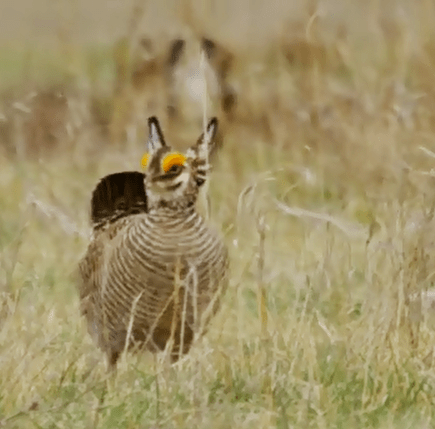
USDA’s Natural Resources Conservation Service is making available about $50 million in financial assistance in 2016 to partner with agricultural producers who want to restore and protect habitat for seven focus species, including more than $2.8 million for the lesser prairie-chicken.

Conservation efforts for the lesser prairie-chicken are part of Working Lands for Wildlife, an innovative partnership that supports struggling landscapes and strengthens agricultural operations.

In making the announcement, Agriculture Secretary Tom Vilsack noted that the decisions of agricultural producers have powerful impacts on wildlife and the long-term health of their own land.

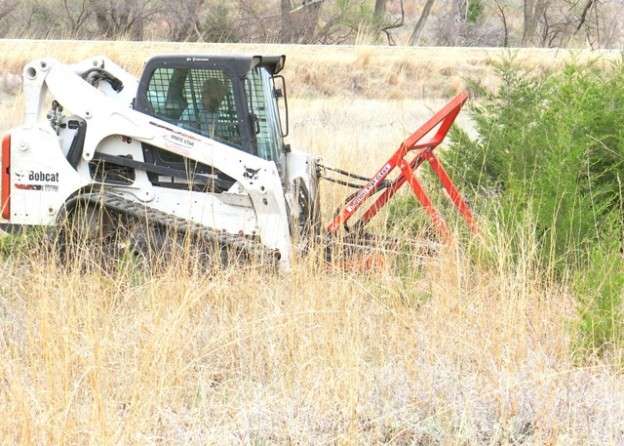
Removing invasive redcedars in southwest Kansas.

Removing invasive redcedars in southwest Kansas.

“The partnerships formed through our Working Lands for Wildlife initiative have had proven success for bringing back several of America’s native species,” Vilsack said. “By managing ranches with sage grouse and other wildlife in mind, producers also strengthen their own operations, boost resilience and increase agricultural yields.”

In addition to funding lesser prairie-chicken habitat improvement through the Lesser Prairie-Chicken Initiative (LPCI), Vilsack announced more than $47 million available in 2016 to support six other WLFW initiatives for focus species across the country, including the greater sage grouse, New England cottontail, southwestern willow flycatcher, golden-winged warbler, gopher tortoise, and bog turtle.

With the support of conservation partners and producers, NRCS launched the Lesser Prairie-Chicken Initiative (LPCI) in 2010. Those efforts became one of the models for WLFW, which began two years later.

Since 2010, the NRCS-led LPCI partnership has worked with land managers to make conservation improvements on more than one million acres of habitat, benefitting the lesser prairie-chicken and more than 60 other prairie-dependent species.

“Working Lands for Wildlife helps land managers integrate wildlife-friendly measures into their working lands and also ensures they can keep those lands working,” said Jon Ungerer, LPCI Coordinator. “Conservation practices funded through LPCI are designed to provide long-term benefits for lesser prairie-chickens. These practices maintain and protect grassland habitat, which benefits livestock production and wildlife.”

Landowners in the LPCI Action Area  can apply for technical and financial assistance through the Environmental Quality Incentives Program and Conservation Stewardship Program. NRCS financial assistance covers part of the cost to implement conservation practices that benefit the lesser prairie-chicken.

Interested landowners are encouraged to contact their local USDA service center.
Latest Video Shows Roots of LPCI’s Win-Win Conservation

What’s the Lesser Prairie-Chicken Initiative about, in a nutshell? How does its work benefit lesser prairie-chickens and the private landowners who steward their habitat? LPCI’s latest video answers these questions and many more in a four-minute introduction to the LPCI partnership, which the Natural Resources Conservation Service launched in 2010.

Watch the 4-minute video:

https://youtu.be/SNrdpQ8r8RI

The Role of Sand Sagebrush in Prairie Grasslands

Prairie Profile: Sand Sagebrush (Artemisia filifolia)

Wherever loose, sandy soils occur in the Southern Great Plains, there’s a good chance you’ll find sand sagebrush growing. Roll its gray-green foliage between your fingers, and you’ll catch the spicy aroma of a plant that’s an important part of the prairie community—one that benefits livestock and wildlife alike.

Sand sagebrush (photo: Dwayne Elmore)

Sand sagebrush (photo: Dwayne Elmore)

Sand sagebrush prairie (photo: Dwayne Elmore)

Sand sagebrush prairie (photo: Dwayne Elmore)

Sand sagebrush covers some 15 million acres of the Southern Great Plains and grows throughout the lesser prairie-chicken’s range. In this drought-prone region, sand sagebrush creates conditions that help the prairie community weather dry times. Its deep roots can draw water from as much as 30 feet below ground and redistribute it near the soil surface, where it’s available to grasses and forbs. These extensive roots also anchor sandy soils, limiting wind erosion and creating a stable growing site for other prairie plants.

In winter, the branches of sand sagebrush trap snow, which returns moisture to the surrounding soil when it melts. These branches create a shelter from summer sun and wind for the many species of grasses and forbs that thrive in sandy soils.

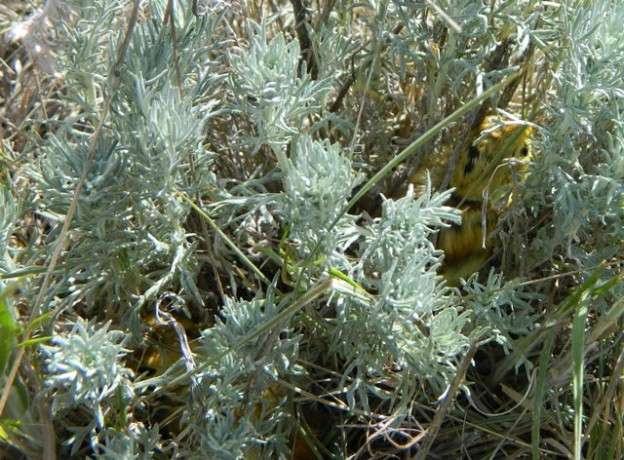
Lesser prairie-chicken chicks take refuge in sand sagebrush (photo: David Haukos).

Lesser prairie-chicken chicks take refuge in sand sagebrush (photo: David Haukos).

Many animals depend on sand sagebrush as well. For lesser prairie-chickens, sand sagebrush offers cover for hiding and nesting, protection from extremes of heat and cold, and a winter food source. Scaled quail, northern bobwhite, Cassin’s sparrow and many other grassland birds rely on sand sagebrush as well—studies have shown a decline in bird diversity and abundance when sand sagebrush is removed from prairie grasslands (Rodgers and Sexson, 1990).

The sand sagebrush ecoregion is one of four vegetative community types within the lesser prairie-chicken’s range. In the 1970s, this ecoregion was home to more lesser prairie-chickens than any of the other three ecoregions. According to surveys in 2014, this ecoregion now holds the smallest number of lesser prairie-chickens of the four ecoregions (McDonald et al. 2014). Carefully planned conservation practices can help restore sand sagebrush prairie habitat for the benefit of both prairie wildlife and cattle. Lesser Prairie-Chicken Initiative funding helps landowners plan and carry out these practices.

Managing Sand Sagebrush with Prescribed Fire and Grazing

Historically, fire and periodic intensive grazing by bison shaped sand sagebrush rangelands. Fire burns back old sand sagebrush plants and releases the grasses and herbs that have grown up in the shrub’s shelter. Well-adapted to fire, sand sagebrush resprouts vigorously after a burn, quickly establishing hiding cover for prairie wildlife.

Prescribed fire and sustainable grazing practices mimic this natural dynamic and are excellent

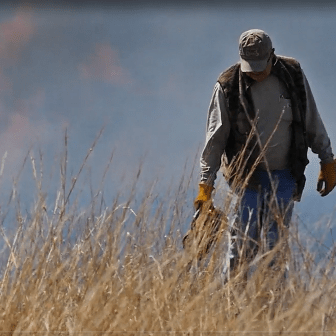
Lighting a perimeter fire during a prescribed burn, Kansas (photo: Sandra Murphy)

Lighting a perimeter fire during a prescribed burn, Kansas (photo: Sandra Murphy)

resource conservation tools for ranchers in sand sagebrush habitat. Fire stimulates not only the resprouting of sand sagebrush, but also the vigorous regrowth of grasses and forbs. Cattle focus their grazing on this lush, newly burned land, giving less recently burned areas of the range a rest from grazing. Carefully planned burning and grazing create the mosaic of habitat structure that lesser prairie-chickens and other prairie wildlife need. In addition, fire helps reduce the extent of eastern redcedar, which can quickly overtake prairie grasslands when fire is excluded.

If you’re a landowner in the lesser prairie-chicken action area, contact your local NRCS field office for information about the conservation assistance programs available for improving the health and productivity of sand sagebrush habitat.

Texas Rancher Creates Habitat Legacy

by Quenna Terry, NRCS Public Affairs Specialist

For third-generation farmer and rancher Steve Rader, diversity is the key to ranch sustainability. Rader Ranch, in the Panhandle region near Follett, is home to some 400 head of cattle in average rainfall years. It’s also home to abundant wildlife, including white tailed deer, pronghorn antelope, blue and bobwhite quail, and lesser prairie-chickens.

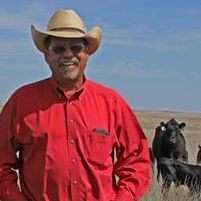
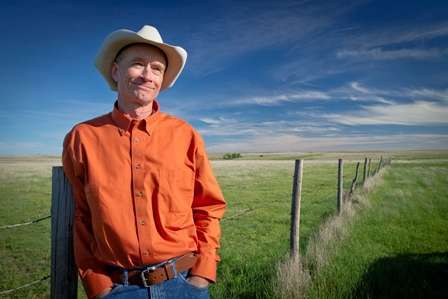
Steve Rader (red shirt) and Thomas Hunt, NRCS district conservationist Hemphill Field office. Rader says his family has worked with NRCS for more than 50 years.

Steve Rader (red shirt) and Thomas Hunt, NRCS district conservationist. Rader says his family has worked with NRCS for 50 years.

Rader manages the ranch for native rangeland, cropland with native grasses in the Conservation Reserve Program, and cropland with wheat. This diversity helped the both the ranch and its resident wildlife weather the intense drought of 2011-12.

Rader refers to his ranch as the “Refuge for Life,” a place he has always called home.   It’s where he and his wife, Linda, raised their three children, Justin, Haley and Sarah, and a way of life and legacy his grandfather started in 1917.

Without diversity on the ranch, Rader contends, grasses are easily overgrazed, especially during periods of drought.

“Our land is so fragile and it takes a long time to recover,” he says.  “Our cattle are spread out over a number of acres to let pastures rest.  We’ve had to whittle down our cattle numbers to keep from overgrazing.”

Rader first learned the value of such sustainable management strategies from his dad, who believed in resting pastures.  “We expect too much from our land,” Rader says. “Resting it helps.”

FB,IMG_1695_1

Steve Rader and Mary Foster, NRCS district conservationist, review Rader’s new conservation plan.

He recalls how, when he was young, his dad worked with USDA’s Soil Conservation Service, now the Natural Resources Conservation Service (NRCS) to help manage the land better.

“NRCS has helped us for 50 years, and they’ve been a strong, reliable source for good advice,” Rader says.  “NRCS has never led us in the wrong direction.”

Since he took over management of Rader Ranch in 1975, he has continued to work with NRCS to plan and implement conservation practices for livestock and wildlife.   NRCS technical and financial assistance have helped him improve forage, install water facilities for better grazing distribution; and implement rotational grazing.

To further his conservation goals, Rader recently reached out to NRCS to request a Working Lands For Wildlife predictability plan, through which landowners voluntarily adopt conservation practices that benefit the lesser prairie-chicken. By doing so, they receive protection from “incidental take” of the lesser prairie-chicken caused by implementing the conservation plan.

“Wildlife is a part of our life,” Rader says.  “My philosophy is: we have prairie- chickens on our land and we have to be good stewards of the land for any species.”

Correction: (11/24/15) Our original post of this article included reference to “invasive sand sage.” Sand sage is a natural and beneficial plant species in the Southern Great Plains. We will be creating a follow-up post to discuss the important role of brush species for the prairie community.

New Guide Explains LPCI Conservation Assistance Programs

The array of conservation assistance programs available to private landowners in lesser prairie-chicken country can be mighty confusing. A concise new publication of the Lesser Prairie-Chicken Initiative (LPCI) sheds light on several key programs.

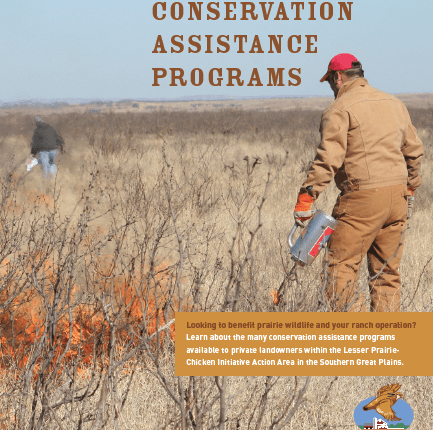
LPCIConsAssistBrochCoverHow long do the contracts last for each program and how do they differ from one another? Can a landowner take part in more than one program at the same time? Who should a landowner contact to get started?

LPCI’s new Conservation Assistance Programs brochure answers these questions and many more. It also provides a handy table comparing six assistance programs offered by the Natural Resources Conservation Service, Farm Service Agency, and Western Association of Fish and Wildlife Agencies.

Read the LPCI Conservation Assistance Programs brochure [PDF]

High Resolution PDF

New Study on Habitat Use Yields Insights for Prairie-Chicken Management

“Great things can happen when researchers are willing to share data.” That’s one of the take-homes for Dr. Virginia Winder, author of a recently released study that examines factors affecting space use by female prairie-chickens. Sixteen researchers contributed to the study, which analyzed nearly twenty years of data on ten populations of greater and lesser prairie-chickens in five states.

Read the research paper.

Female lesser prairie-chicken (left) wears a satellite transmitter that tracks her movements (photo courtesy David Haukos).

Female lesser prairie-chicken (left) wears a satellite transmitter that tracks her movements (photo Jeremy Roberts, Conservation Media).

The study offers important insights about managing prairie-chicken habitat. First, Winder found that prairie-chickens actively select for prairie habitat. While prairie habitat made up 45-89% of the landbase of the study sites (cropland dominated the remaining landbase), prairie-chicken home ranges comprised 70-97% prairie habitat.

As Winder explains it, “prairie-chickens are using the prairie above and beyond its availability, which means they’re actively selecting for it.” Simply put, prairie-chickens need prairie habitat—cropland doesn’t provide a habitat substitute, and interspersing prairie and cropland habitats can affect the way prairie-chickens use the landscape.

Second, proximity to lek sites (springtime mating display areas) was a strong and consistent predictor of space use for female prairie-chickens at all ten sites. More than 95 percent of the 382 females monitored in the study had home ranges centered within three miles of leks during the breeding and nesting period (March through August).

According to Christian Hagen, co-author of the study and science advisor to the Lesser Prairie-Chicken Initiative (LPCI), this finding validates LPCI’s conservation strategy of focusing habitat improvement efforts on the range surrounding lek sites.

“The study substantiates that targeting specific portions of this prairie landscape—in particular, grassland habitat around leks—is the right way to go, across the bird’s distribution,” says Hagen.

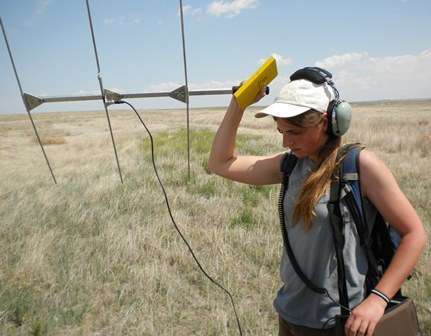
Researcher tracks radio-tagged prairie-chickens (photo courtesy David Haukos).

Researcher tracks radio-tagged prairie-chickens (photo courtesy David Haukos).

Hagen explains that the females’ choice for nesting and brooding habitat seems to be dictating where males choose to lek. “In the absence of detailed research, leks can provide a strong indicator of the areas important to the viability of the population.”

Third, the data analysis showed significant site variation in the relative importance of other predictors of space use. Winder explains that prairie-chickens are dealt a far different hand in New Mexico than they are in Kansas, in terms of plant composition, rainfall, and levels of human disturbance. The birds respond differently to these varied prairie habitats.

“What we call a prairie in New Mexico is very different from what we call a prairie in Kansas, even though it’s the same bird using both those habitats.” Winder said. This suggests that generalized habitat management guidelines may not always be appropriate for prairie-chickens.

For Hagen, the study brings home the fact that prairie-chickens are truly landscape-scale species, evidenced by the finding that females use a median home range of up to 14.2 square miles of habitat during the breeding season alone. Given their need for landscape-scale habitat, lesser prairie-chickens require landscape-scale conservation—the central aim of the Lesser Prairie-Chicken Initiative.

Kansas Rancher Puts Expired CRP Grasslands to Work for Cattle and Wildlife

“My great grandparents settled out here back in the 1880s. So we’ve been at it quite a while,” says Dwight Abell with a wry smile. He and his wife Rhonda own and operate the Abell Ranch in western Kansas with their four children, Hannah, Laura, Wyatt, and Ethan.

Rancher Dwight Abell (photo Jeremy Roberts, Conservation Media)

Rancher Dwight Abell (photo Jeremy Roberts, Conservation Media)

Ten years ago, Abell enrolled his cropland acreage into the Conservation Reserve Program (CRP). “I’m not a lazy guy,” Dwight Abell laughs, “but I don’t like farming for 12 hours a day or the expense of doing it. Raising cattle has made us more money every year than farming has—we’re able to keep more.”

The mix of native grass and forb species in Abell’s CRP grasslands—including big bluestem, little bluestem, switchgrass, buffalograss, western wheatgrass, and plenty of insect-rich flowering forbs—provides prime habitat for lesser prairie-chickens.

When the 10-year CRP contract expired this year, Abell looked to the Lesser Prairie-Chicken Initiative (LPCI) for assistance in shifting the expired CRP grasslands to cattle grazing. It’s a win-win proposition. CRP grasslands provide critical habitat for lesser prairie-chickens, according to Christian Hagen, LPCI science advisor. But, says Hagen, producers often need assistance to make the transition to grazing, which can have significant up-front costs.

“Installing a perimeter fence for livestock grazing can be cost-prohibitive. LPCI offers financial assistance to help with that,” Hagen explains. “The result has been a very successful program that takes these idled croplands that were converted to CRP many years ago and turns them into a working landscape.”

That’s good news for prairie chickens and other grassland wildlife. “We have a really diverse wildlife population out here,” says Abell. He begins listing some of the wildlife he sees on the ranch, including whitetail deer, mule deer, pronghorn, prairie chickens, and many native songbirds.

That grassland bird diversity is the focus of a study underway through the Bird Conservancy of the Rockies (formerly the Rocky Mountain Bird Observatory). Abell’s ranch is one of the study sites for research assessing the extent to which LPCI conservation practices for the lesser prairie-chicken increase populations of other grassland bird species.

With LPCI assistance, Abell’s expired CRP lands will continue to offer high-quality grassland habitat to prairie wildlife. “I’m 100% committed—I’m not going to tear this out. It just works better for our operation to have cattle and grass.”

Learn more about LPCI’s role in conserving CRP grasslands for lesser prairie-chickens in our 3-minute video.

LPCI Partners Awarded for Conservation Efforts

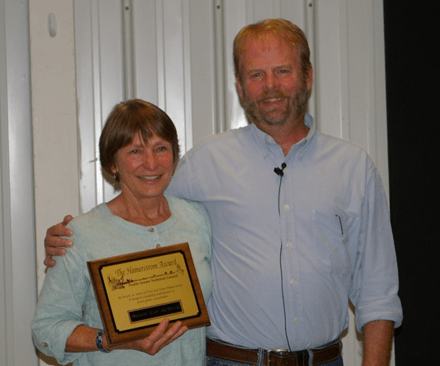
Two Lesser Prairie-Chicken Initiative partners were recently honored for their important contributions to prairie grouse conservation. At its biannual meeting on September 24, the Prairie Grouse Technical Council awarded the Hamerstrom Award to Patricia “Tish” McDaniel of eastern New Mexico and Dr. David Haukos of Kansas.

Tish McDaniel and Dave Haukos both received the Hamerstrom Award for their contributions to lesser prairie-chicken conservation.

Tish McDaniel and Dave Haukos both received the Hamerstrom Award for their contributions to lesser prairie-chicken conservation.

The Hamerstrom Award recognizes individuals or organizations who have made significant contributions in prairie grouse research, management, or other support programs which have enhanced the welfare of one or more species of prairie grouse.

Tish McDaniel has been a central figure in the conservation of eastern New Mexico habitat and lesser prairie-chickens for more than 15 years. Dave Haukos presented the award to McDaniel and described her conservation impact.

“Very few individuals can match Tish’s depth and breadth of experience, knowledge, and expertise on lesser prairie-chickens in the Sand Shinnery Oak Prairie Ecoregion,” Haukos said.  “Within the next 3-5 years nearly every publication on lesser prairie-chickens in eastern New Mexico will be directly linked to her support.”

From 2005-2014, McDaniel managed the Milnesand Prairie Preserve for The Nature Conservancy. During that time, she developed partnerships and conservation practices that resulted in the greatest density of lesser prairie-chickens documented in eastern New Mexico since the mid-1980s.

McDaniel talks with Garth Coombes, New Mexico rancher and heavy equipment operater.

McDaniel talks with Garth Coombes, New Mexico rancher and heavy equipment operator, during a conservation project.

McDaniel was instrumental in developing conservation easements that protect a number of large ranches from development.  She co-coordinated the High Plains Prairie-Chicken Festival from 2002-2012, introducing  more than a thousand people to lesser prairie-chickens.

Now a range conservation scientist for LPCI partner organization CEHMM, also known as the Center of Excellence, McDaniel works one-on-one with private landowners and industry in habitat restoration projects that benefit the lesser prairie-chicken.

Weaver Ranch manager Willard Heck has known McDaniel for 15 years. He describes her ability to collaborate with people on both sides of an argument.

“You learn that not everybody has that gift, and getting along with people is the key,” Heck said. “She has a real gift for dealing with landowners. She’s honest and looks out for their welfare and looks for a common ground where it still benefits landowners, and they really trust her in that way.”

In presenting the Hamerstrom Award to Dave Haukos, Dr. Clint Boal described Haukos’ immense contributions to lesser prairie-chicken research.

“Dr. Haukos has authored or co‐authored over 20 peer-reviewed publications that have been published or accepted for publication,” Boal said. Most recently, Haukos co‐edited Conservation and Management of Lesser Prairie‐Chickens, a 17-chapter volume in the series Studies in Avian Biology to be released this fall.

Members of Dave Haukos' research team affix a transmitter to a female lesser prairie-chicken to track her movements.

Members of Dave Haukos’ research team affix a transmitter to a female lesser prairie-chicken to track her movements. (photo courtesy David Haukos)

Haukos helped pioneer the use of satellite GPS transmitters on prairie-chickens, providing insights into population dynamics, resource selection, movements, and more. He has served as principle investigator (PI), co-PI, or collaborator  in 18 lesser prairie-chicken research projects, supervising post-doctoral and graduate students in four states and three universities.

“Dave has been a pioneer in lesser prairie-chicken research,” says LPCI Science Advisor Christian Hagen, “from his use of distance sampling to his overseeing the deployment of GPS transmitters across multiple states and study areas.

“Without his efforts past and present, there would be gaping holes in our understanding of lesser prairie-chicken ecology,” Hagen adds.

In the nearly 30 years Haukos has worked with prairie chickens, his goal has always been to provide sound research results that can inform conservation planning.

“Landowners and lesser prairie-chickens share the land and are interdependent for their existence, so information and support for land use strategies that benefit both lesser prairie-chickens and landowners has been my primary focus.”

Heartfelt congratulations and gratitude to Tish McDaniel and Dave Haukos for their work on behalf of prairie chickens and the landowners who steward their habitat.


LPCI’s Latest Video Shows Win-win Role of Prescribed Fire

“The prairie has to have fire or it’s going to be gone—we’re going to lose it to the encroachment of trees.” Those are the words of rancher Ed Koger of southwest Kansas. He should know–he’s been applying prescribed fire on the Hashknife Ranch for almost 40 years.

LPCI’s latest video shows the win-win nature of prescribed fire for ranchers and prairie chickens. The story’s told through the eyes of Koger and fellow southwest Kansas rancher, Bill Barby. Don’t miss this compelling 5-minute video on the LPCI YouTube channel.

The video is the second of three that LPCI is releasing this fall, highlighting win-win range conservation practices on the prairie. It joins our recently released video on LPCI’s role in Conservation Reserve Program grassland management.

https://www.youtube.com/watch?v=cboQmk6FCgc

Historic Partnership Averts ESA Listing for Greater Sage-Grouse

Great news from the Sage Grouse Initiative:

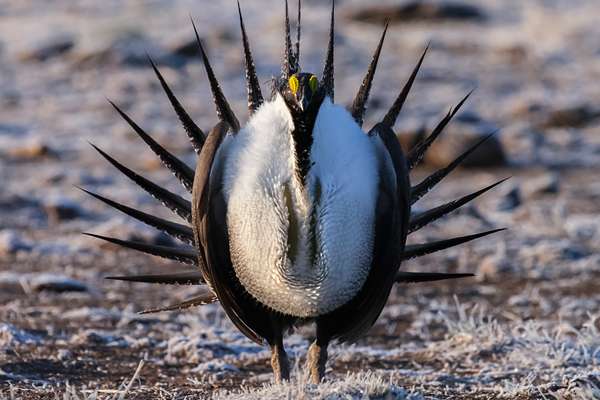
On September 22, 2015, the U.S. Fish and Wildlife Service announced that voluntary sage grouse partnerships helped prevent ESA listing of the greater sage grouse.

An historic conservation partnership helped the U.S. Fish and Wildlife Service determine that the greater sage grouse did not warrant protection under the Endangered Species Act. Led by the USDA Natural Resources Conservation Service, the Sage Grouse Initiative (SGI) is a key catalyst for the voluntary, partnership-based work that is conserving America’s sagebrush sea.

Like the Lesser Prairie-Chicken Initiative, SGI is one of several NRCS landscape conservation initiatives. The greater sage grouse and lesser prairie-chicken are two of seven species targeted for conservation under the Natural Resources Conservation Service (NRCS) umbrella initiative called Working Lands for Wildlife (WLFW).

SGI’s shared vision of wildlife conservation through sustainable ranching provides win-win solutions for ranchers, sage grouse and 350 other wildlife species. With more than 1,100 participating ranches in 11 western states, SGI and its partners have already invested $424.5 million and conserved 4.4 million acres, an area twice the size of Yellowstone National Park.

SGI-2.0-photo-ken-miracle-homepage-tile-300x248

photo: Ken Miracle

SGI’s efforts won’t stop there: NRCS has committed $211 million more towards its new sage grouse investment strategy, dubbed SGI 2.0, through 2018. This investment provides partners with unprecedented certainty that conservation on working lands will continue. With partner contributions, SGI will have conserved or protected an estimated 8 million acres by 2018—an area more than seven times that of the Great Salt Lake. Here’s a sampling of SGI’s outcomes since 2010:

>> Targeting investments: SGI benefits large populations by targeting more than 75 percent of investments inside population strongholds. The remaining quarter maintains connectivity to surrounding habitats.

>> Decreasing exurban development: Conservation easements have increased 18-fold since 2010, reducing subdivision threat on 450,000 acres. Wyoming Governor’s energy policy and subdivision-halting easements together reduce anticipated bird losses by two-thirds.

>> Reducing cultivation of grazing lands: Farm Bill “Sodsaver” provision cut by half the risk of cultivation of large intact sagebrush grazing lands. Easements in Montana help maintain the longest-known sage grouse migration by reducing cultivation risk by 34 percent.

>> Restoring habitat quality: Invasive conifers have been removed on 400,000 acres. Two-thirds of the conifer threat has been alleviated on private lands in Oregon. Science shows that cuts maintain grouse populations in otherwise suitable habitat.

>> Improving rangeland health: SGI has enhanced rangeland health by applying grazing systems, re-vegetating former rangeland with sagebrush and perennial grasses, and controlling invasive weeds on more than 2.4 million acres. Proactively marking or moving high risk fences prevents 2,600 fence collisions annually.

>> Providing regulatory predictability: SGI provides peace of mind to ranchers. SGI has worked with the FWS to ensure that landowners who maintain NRCS conservation systems remain compliant with Endangered Species Act provisions.

>> Benefiting other species: SGI conserves the sagebrush ecosystem and its 350 other wildlife species. In Oregon, sagebrush-dependent songbirds climbed 55-81 percent in places where invading juniper trees were removed for sage grouse. In Wyoming, proactive measures for sage grouse also conserved 75 percent of habitats for migratory mule deer.

ken-miracle-sage-grouse-with-livestock-background

photo: Ken Miracle

Conservation work—both on public and private lands—is providing wins for wildlife across the country, from sage grouse and cottontails to black bears and native fish. We’ve recently celebrated decisions not to list the New England cottontail, the genetically distinct population of greater sage-grouse on the California-Nevada border, the Arctic grayling, and the proposed delisting of the Louisiana black bear.

All of these successes show that partnering with private landowners on targeted, voluntary conservation projects has tremendous positive impacts for wildlife, clean water, and healthy soil.

Read the USDA-NRCS press release here.