Author Archives: Greg Peters

First in Conservation Strategies Series highlights Redcedar Removal

What range conservation strategies can landowners put in place with Lesser Prairie-Chicken Initiative assistance to benefit lesser prairie-chickens and their ranch operations? The first fact sheet in LPCI’s new Conservation Strategies Series introduces landowners to a key strategy for prairie habitat conservation—eastern redcedar removal.

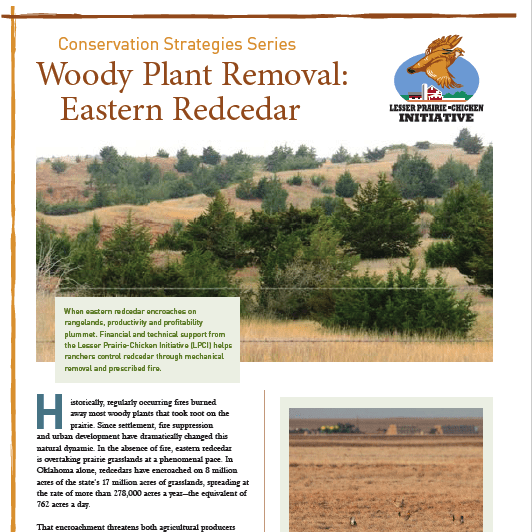
Screen Shot 2016-03-29 at 8.23.25 AMRead the LCPI Conservation Strategies Series factsheet—Woody Plant Removal: Eastern Redcedar

The conservation strategy fact sheet incorporates the latest scientific data on eastern redcedar encroachment in lesser prairie-chicken habitat, described in LPCI’s newly release Science to Solutions report.

The two-page fact sheet highlights the problem of redcedar encroachment, the benefits of controlling it, the most efficient and effective means of controlling it, and how to get started with LPCI assistance.

Over the coming months LPCI will be adding fact sheets to our Conservation Strategies Series. Stay tuned!


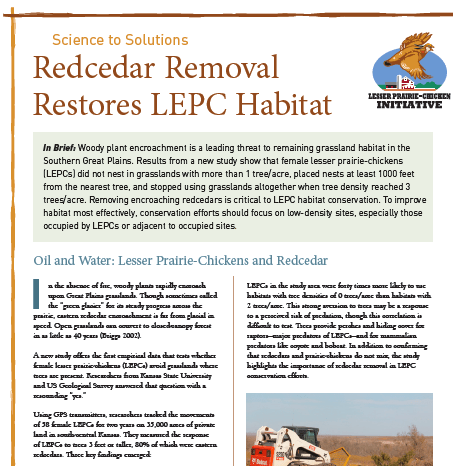
SCIENCE TO SOLUTIONS: Redcedar Removal Restores Lesser Prairie-Chicken Habitat

The science is in! A new study by researchers from Kansas State University and US Geological Survey resoundingly confirms that redcedar encroachment on the Southern Great Plains greatly impacts lesser prairie-chickens.

Screen Shot 2016-03-24 at 9.56.18 AMRead our Science to Solutions report about the study and the LPCI management recommendations the study informs.

Using GPS transmitters, researchers tracked the movements of 58 female lesser prairie-chickens  for two years on 35,000 acres of private land in south-central Kansas. They measured the response of the prairie-chickens to trees 3 feet or taller, 80% of which were eastern redcedars. Three key findings emerged:

  • Female lesser prairie-chickens did not nest in grasslands with more than 1 tree per acre.
  • They avoided trees by about 1000 feet on average when selecting habitat and nest sites.
  • They stopped using grasslands altogether when tree density reached 3 trees/acre.

LEPCs in the study area were forty times more likely to use habitats with tree densities of 0 trees/acre than habitats with 2 trees/acre. The findings make it clear that removing redcedar, even when present at very low densities, is critical to LEPC conservation.

The Lesser Prairie-Chicken Initiative (LPCI) uses science to develop management practices that will most efficiently and effectively improve habitat for lesser prairie-chickens, delivering the greatest return on investment.

In response to this latest study, LPCI has released its first Science to Solutions paper, “Redcedar Removal Restores LEPC Habitat,” identifying conservation practices aligned with these scientific findings. The recommendations center on three key strategies:

  • Focus on stands with low-density redcedar encroachment, giving priority to sites within LEPC focal areas and connectivity zones, and sites already occupied by LEPC or adjacent to occupied sites.
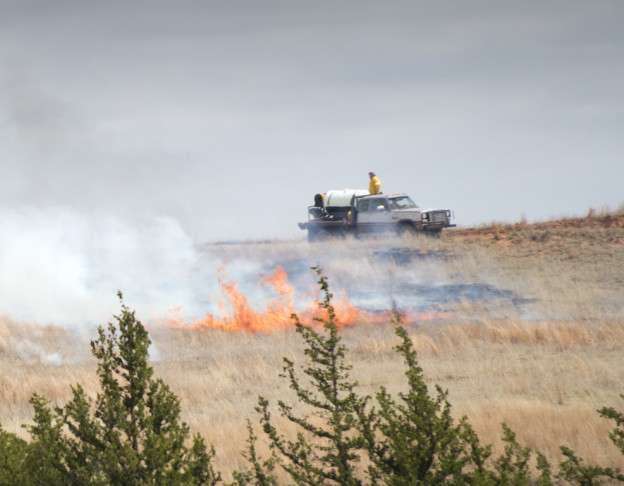
  • Use mechanical cutting or prescribed fire to remove all redcedar trees on treated acres.
  • Use prescribed fire to maintain or restore open grasslands. Regular use of prescribed fire is a cost-effective way to prevent woody encroachment on grasslands.

Read the full Science to Solutions paper for details!

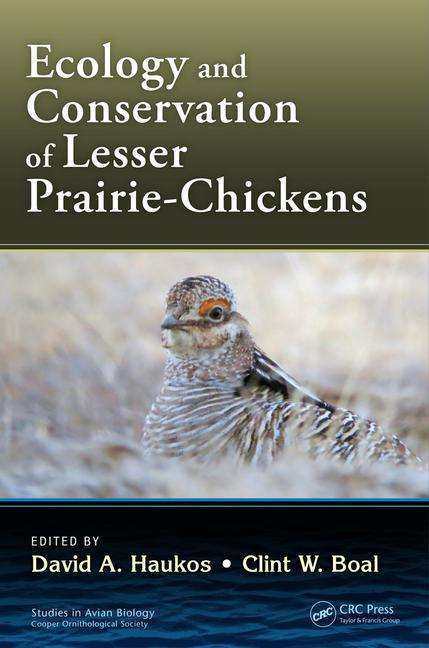
New Book Presents Current Knowledge of Lesser Prairie-Chickens

“The opportunity is before us to make a different future, and untested approaches are in motion. Is it enough of the right actions in the right places to maintain and recover this icon of the Southern Great Plains? The final outcome hinges on our collective will to restore the prairie and the dynamic disturbances that maintain it.”        –from Ecology and Conservation of Lesser Prairie-Chickens (2016)

It’s here! The much-anticipated Ecology and Conservation of Lesser Prairie-Chickens has just been released by CRC Press. Edited by Dr. David Haukos and Dr. Clint Boal, the 376-page book synthesizes the current body of knowledge on lesser prairie-chickens, creating an invaluable resource to guide future research, management, and conservation efforts.

“This book is the first comprehensive assessment of not only the species status, but also the opportunities and challenges to conserving it,” says LPCI Science Advisor Christian Hagen, who coauthored three chapters.

Hagen is one of thirty-one contributors to the book. Collectively they provide a detailed picture of the species and the complexities surrounding its conservation.

The book’s seventeen chapters explore the history of ecosystem degradation and loss of habitat that contributed to the lesser prairie-chicken’s current situation, its legal status, life cycle, population dynamics, and habitat needs, as well as such emerging issues at the impacts of disease, energy development and climate change.

The final section of the book focuses on conservation and management in each of the four ecoregions the lesser prairie-chicken inhabits in the Southern Great Plains.

Hagen and Dwayne Elmore coauthored the book’s concluding chapter. They note that, with more than 95% of the lesser prairie-chicken habitat in private ownership, conservation hinges on voluntary actions by private individuals.

“The next step in Lesser Prairie-Chicken conservation is a social experiment in which we will endeavor to educate, encourage, and fund landowners to maintain or improve their operations to benefit habitat conditions, quality of life, and ultimately conditions on the landscape for the species,” they write.

For more information about content and coauthors, and to order the book, visit 

New tool turns science into actions for working lands and wildlife

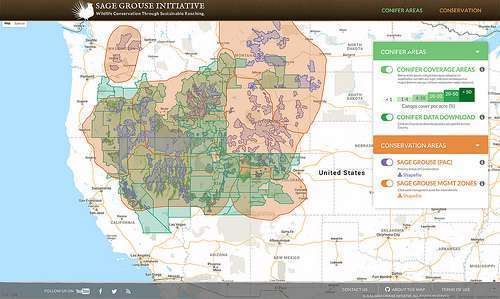
Today, the Sage Grouse Initiative, led by USDA’s Natural Resource Conservation Service, is unveiling a new tool to catalyze and improve habitat conservation efforts across the western United States. The SGI Interactive Web Application is free and available to the public, presenting cutting-edge geospatial data covering 100 million acres. The SGI science team has developed an easy-to-use web application that helps visualize, distribute, and interact with information about the sagebrush-steppe ecosystem.

Like the Southern Great Plains Crucial Habitat Assessment Tool map used land managers in the grasslands habitat ecoregions within the Lesser Prairie-Chicken Initiative action area, the SGI Interactive Web Application will help resource managers manage sagebrush-steppe habitat efficiently and effectively.

24589616893_d2de74a21e

The SGI Interactive Web Application enables conservationists to help plan the best conservation efforts to restore sage grouse habitat.

Developed in partnership with the University of Montana and others, SGI used Google Earth Engine to build a new interactive online map that, for the first time, combines layers of related data to better target invasive species damaging habitat and rangeland in 11 states. The new app currently allows farmers, ranchers, conservationists and other partners to analyze data on the encroachment of conifers and cheatgrass on key rangeland. The SGI science team will continue to add more layers to the map as they are developed—such as data on fence collisions and subdivision risk—to help address threats to sage grouse and the 350+ species that depend on healthy sagebrush-steppe habitat.

The goal is to put information directly into the hands of the resource managers who need it. The layers available now include high-resolution tree canopy cover and ecosystem resilience and resistance index data across the range of sage grouse. All data can be easily downloaded, allowing custom analysis to make the most difference for working lands and wildlife.

“By putting cutting-edge products at the fingertips of practitioners and landowners, it helps us more quickly turn science and technology into targeted action on-the-ground,” said Jeremy Maestas, NRCS regional biologist.

Brady Allred, a rangeland specialist with University of Montana who developed the new web app, said he is excited that SGI will continue to build on the tool over time.

“Since we focused on such a large area, we are able to provide the big picture—it’s a better view of what’s occurring across boundaries, so that each effort supports the greater goal and helps reduce future threats,” Allred said.

The newly created tree canopy cover layer, developed by Michael Falkowski at Colorado State University, shows where conifers are degrading critical habitat on the range. SGI and partners can use this information to target projects that improve sage grouse habitat by removing invading conifers when the trees are young and more easily eradicated. Another layer now available provides an index of ecosystem resilience and resistance to cheatgrass based on underlying soil temperature and moisture, which will help resource managers protect and restore crucial sagebrush ecosystems.

All of the information can be easily visualized on top of physical maps or the latest satellite imagery. Users can quickly identify and compare areas of concern, evaluating potential restoration or prevention opportunities. Data can be imported from the web application directly into GIS software, which allows the public to customize the information for land management or conservation purposes. Data for individual counties can be downloaded using these simple instructions.

The interactive web application aligns with the Sage Grouse Initiative 2.0 investment strategy, a four-year $211 million effort to help conserve sagebrush habitats in 11 Western states.

“Our Sage Grouse Initiative 2.0 investment strategy has science at its core, and this new website brings crucial information to conservation planners to enable them to craft the best plan for specific locations,” NRCS Chief Jason Weller explained. “Not only will this be pivotal for NRCS staff, but for our partners as well.”

USDA Invests $150 million in Conservation Stewardship Program Assistance for 2016

On February 4, Agriculture Secretary Tom Vilsack announced that $150 million in funding is available for agricultural producers through the Conservation Stewardship Program (CSP), USDA’s largest conservation program. USDA’s Natural Resources Conservation Service (NRCS) plans to add an estimated 10 million acres to the rolls of CSP during fiscal 2016.

In the Lesser Prairie-Chicken Initiative action area, CSP assistance helps agricultural produces carry out range conservation practices that benefit both lesser prairie-chickens and ranch sustainability. (Photo: Jeremy Roberts, Conservation Media)

In the Lesser Prairie-Chicken Initiative action area, CSP assistance helps agricultural produces carry out range conservation practices that benefit both lesser prairie-chickens and ranch sustainability. (Photo: Jeremy Roberts, Conservation Media)

CSP provides financial and technical assistance to help producers voluntarily improve the health and productivity of private and Tribal working lands. NRCS also makes CSP funding available to producers as an additional opportunity to participate in regional landscape-level conservation efforts including the Sage Grouse Initiative, Lesser Prairie-Chicken Initiative,  Longleaf Pine Initiative, and Ogallala Aquifer Initiative.

“The Conservation Stewardship Program is one of our most popular programs with producers because it results in real change on the ground by boosting soil and air quality, conserving clean water and enhancing wildlife habitat,” Vilsack said. “With this investment, we’ll be able to build on the already record number of acres enrolled in USDA’s conservation programs, enabling producers to achieve higher levels of conservation and adopt new and emerging conservation technologies on farms, ranches and forests.”

NRCS accepts applications for CSP throughout the year, but producers should submit applications by March 31 to USDA service centers to ensure they are considered for enrollment in 2016.

Participants with existing CSP contracts that will expire on Dec.31, 2016 have the option to renew their contracts for an additional five years if they agree to adopt additional activities to achieve higher levels of conservation on their lands. Applications to renew are also due by March 31.

Funding is available for more than 100 kinds of enhancements nationwide to help participants:

  • Improve soil quality through use of cover crops, conservation crop rotations and other activities that increase soil productivity.
  • Use water wisely and improve water quality through enhancements such as more efficient irrigation systems and weather monitoring.
  • Restore habitat for wildlife and pollinators such as the greater sage-grouse, lesser prairie-chicken and monarch butterfly through the use of better grazing systems and improved plant management.

A CSP self-screening checklist is available to help producers determine if the program is compatible with their operation. As part of the application process, applicants will work with NRCS field personnel to complete a resource inventory of their land to determine the conservation performance for existing and new conservation activities. The applicant’s conservation performance will be used to determine eligibility, ranking and payments.

Through the CSP, USDA has provided more than $4 billion since 2009 in assistance to farmers, ranchers and forest managers to enhance conservation on more than 70 million acres. For more on technical and financial assistance available through conservation programs, visit www.nrcs.usda.gov/GetStarted.

Since 2009, USDA has invested more than $29 billion to help producers make conservation improvements, working with as many as 500,000 farmers, ranchers and landowners to protect over 400 million acres nationwide, boosting soil and air quality, cleaning and conserving water and enhancing wildlife habitat. For an interactive look at USDA’s work in conservation and forestry over the course of this Administration, visit http://medium.com/usda-results.

How do Lesser Prairie-Chickens Survive the Winter?

by Amy Erickson, LPCI wildlife biologist, Portales NM

Here in eastern New Mexico, winter weather can be unpredictable. Last week, the temperature was in the high 50s, with one day reaching 63 degrees.  This is in stark contrast to the incredible storm we experienced just two weeks earlier—a blizzard so severe that winds were clocked at an amazing 82 miles per hour on Cannon Air Force Base. The blowing snow and sub-freezing temperatures did not relent for 48 hours and claimed the lives of an estimated 35,000 dairy cows in eastern New Mexico and west Texas. Thousands of people lost power, and some were snowed in for days.

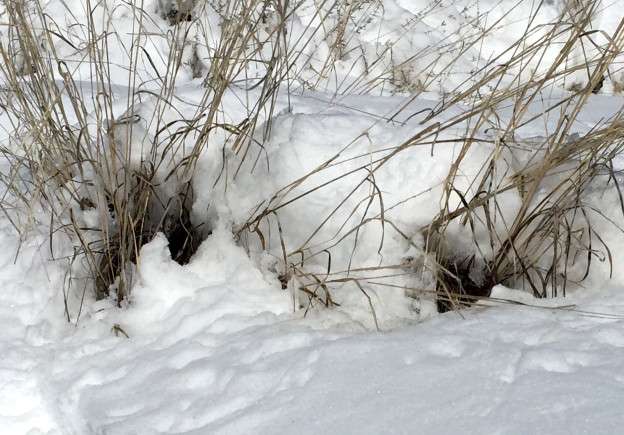
Lesser prairie-chickens burrow beneath the snow to escape winter winds and cold temperatures.

Lesser prairie-chickens burrow beneath the snow to escape winter winds and cold temperatures.

As I sat warm and comfortable in my home, my thoughts turned to the local wildlife. Surely no wild creature could survive a storm of this magnitude, especially not a bird.  They seem so fragile—nothing but feathers and hollow bones and a few scraps of muscle. I remember reading a study on the white-crowned sparrow, a tiny songbird that spends the winter here.  Researchers estimated that this species’ energy needs are so high and their metabolism so fast that they have to find, on average, one seed every 5-10 seconds or they will perish. Truly, birds fascinate me. They survive day by day on the razor-thin edge between life and death. This begs the question—how could a lesser prairie-chicken survive unrelenting blowing snow for two days straight?

Though scientists have yet to collect empirical data on lesser prairie-chicken winter ecology, there’s plenty of anecdotal evidence of their strategies. Like other grouse, lesser prairie-chickens have a unique strategy to deal with snow—they tunnel beneath it to escape the harsh wind! Studies on other grouse, such as ptarmigan, have shown that the birds scoop out burrows in the snow, complete with a ventilation hole at the top. Greater prairie-chickens, the lesser’s larger cousin to the north, have been documented diving into snow banks to escape the wind.

It is likely that the closely related lesser prairie-chicken has similar tricks up its sleeve. Most studies on radio-collared birds show the lowest mortality rates during the winter months and the majority of bird deaths occurring during the breeding season. Rather than being detrimental their survival, the cold and windy winter months may in fact be the safest time of year for the lesser prairie-chicken.

On January 9th, just days after the blizzard subsided, a local landowner spotted a group of 35 lesser prairie-chickens on a ranch near Milnesand. The year before, hunters flushed up 28 birds in the same spot. Against all odds, they seem to be surviving—perhaps even thriving—in the harsh landscape of the southern High Plains.

Tracks in the Sand

Story and photos by Amy Erickson, LPCI wildlife biologist, Portales, NM

Although the sand dunes of eastern New Mexico are full of wildlife, you would hardly know that by walking around them. Save for the occasional lizard, the sandy hills seem devoid of life. If you want to discover the life of the dunes, you have to look closely and allow your imagination to run wild.

blog8

Sand dunes of eastern New Mexico

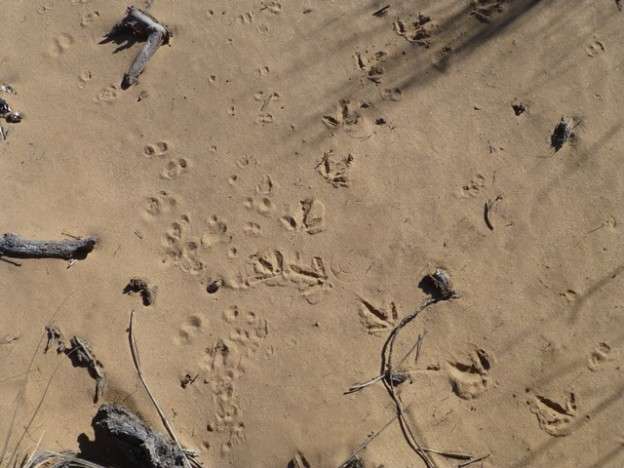
Often, all you see of lesser prairie-chickens and other prairie wildlife are the tracks they leave in the sand. The lesser prairie-chicken that made the tracks below took an abrupt turn–did it see a predator? An Ord’s kangaroo rat passed by as well. Its paired tracks are distinctive, and often there will also be a line in the sand where the kangaroo rat dragged its long banner-tipped tail. Its genus name Dipodomys means “two-footed mouse.”

Blog2

Tracks of lesser prairie-chicken and Ord’s kangaroo rat

The Ord’s kangaroo rat is extremely common throughout the Great Plains. I see signs of them everywhere, their tracks crisscrossing the dune blowouts. Signs of their passing assume other forms as well. Barn owls often take up residence in the many abandoned buildings on the prairies of eastern New Mexico—lonely reminders of the shattered dreams of Dust Bowl days. Barn owls regurgitate pellets of undigested bones and hair, and I like to dig through those pellets to see what the owls have been eating. It seems as if 90% or more of a barn owl’s diet here in New Mexico’s prairie country is kangaroo rats—testament to the amazing numbers that survive in this dry landscape.

Tracks of Ord's kangaroo rat

Tracks of Ord’s kangaroo rat

What must life be like for a kangaroo rat? These little seed-eaters are food for so many other prairie species—barn owls and great-horned owls, red-tailed and ferruginous hawks, northern harriers, coyotes, grey and red foxes, bobcats, badgers, snakes of all kinds. All are watching, waiting for the rat to make one small misstep, venture an inch too far from the safety of its burrow. Death or danger waits around every corner for  kangaroo rats and for their prairie neighbors, the lesser prairie-chickens, something we can hardly comprehend.

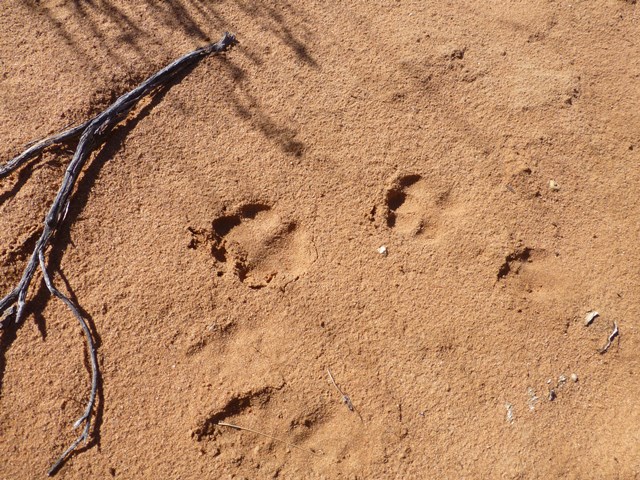
Bobcat tracks

Bobcat tracks

Every time I get to spend a day outdoors I feel so lucky to  experience things that so few others do. For me, there are no worries out there,  alone with the plants and the clouds and my thoughts. Spend a day out on the endless prairie and your worries will be gone—at least temporarily—erased by the wind like tracks in the sand.

LPCI Outreach Materials Offer Conservation Toolkit

What’s the Lesser Prairie-Chicken Initiative (LPCI) all about? How do farmers and ranchers benefit from taking part in voluntary LPCI conservation practices? How do they get started? Throughout 2015, LPCI produced a range of outreach materials for landowners, resource managers, and the general public, answering these questions and many more.

LPCI resource collage

LPCI’s new one-page Resources Toolkit offers links to all of the Initiative’s main publications, website and social media, videos, photo gallery, and more.

The NRCS-led LPCI partnership has created a one-page LPCI Resources Toolkit, which compiles these information sources and offers direct links to each, including the following:

The LPCI website, www.lpcinitiative.org, is the go-to source for information on lesser prairie-chickens and the Lesser Prairie-Chicken Initiative. It offers links to all LPCI news stories, publications, photo and video galleries, reports, and fact sheets. Social media outlets, including Facebook, Twitter, and YouTube channel, provide regular updates on LPCI.

LPCI’s publications include the new, 21-page Conservation Across the Range  report, which highlights the Initiative’s habitat conservation strategies and some of the many landowners who put those strategies in place on the range. The LPCI Introductory brochure gives a brief overview of the Initiative, and the Conservation Assistance Programs brochure helps landowners compare key assistance programs available in lesser prairie-chicken country.

LPCI released three short videos in 2015, which introduce LPCI and highlight two of its key conservation strategies—prescribed fire and conversion of expired CRP grasslands to grazing lands. They can be viewed on the LPCI YouTube channel and in the LPCI website video gallery.

LPCIvideos

LPCI produced three short videos in 2015 to introduce the Initiative and highlight two key conservation strategy for which LPCI provides technical and financial assistance.

The LPCI website photo gallery offers images of lesser prairie-chickens, their habitat, range conservation strategies, participating ranchers, and researchers, available for non-commercial purposes.

Download the LPCI Resources Toolkit.

Visit the LPCI Resources page.

NRCS and Texas Ranchers Team up for Conservation

With the help of technical and financial assistance from the Natural Resources Conservation Service (NRCS), Texas farmers and ranchers put conservation practices to work on 3.1 million acres in 2015. That’s the encouraging message NRCS State Conservationist Salvador Salinas delivered at the 2015 Texas Commodity Symposium at the Amarillo Farm and Ranch Show last month.

NRCS State Conservationist Salvador Salinas presents the annual conservation update at the Texas Commodity Symposium in December 2015.

NRCS State Conservationist Salvador Salinas presents the annual conservation update at the Texas Commodity Symposium in December 2015.

NRCS State Conservationist Salvador Salinas presents the annual conservation update at the Texas Commodity Symposium in December 2015.
In the Texas Panhandle alone, private landowners signed conservation assistance contracts covering 700,750 acres. This includes 13,000 acres under Lesser Prairie-Chicken Initiative contracts, and 13 new conservation plans on 47,300 acres under the Working Lands for Wildlife program.

Addressing the symposium’s many agricultural producers, Salinas said, “It’s a testament to the good conservation work that you producers have done over the past several years that the population of the lesser prairie-chicken is growing.”

Aerial surveys of lesser prairie-chicken leks (breeding sites) conducted in the spring of 2015 showed an estimated 30% population increase since the previous year’s survey in the Mixed Grass Prairie Region of the northeast Panhandle of Texas, northwest Oklahoma and south central Kansas.

Salinas credited farmers, ranchers, and other partners for natural resources conservation implementation across the state.  He explained how Farm Bill programs are the producer’s programs.

“To remain successful in our efforts to serve the farmers and ranchers of Texas, I continue to ask for your input to help NRCS tailor the conservation programs we administer to ensure we address all natural resource concerns for the state,” Salinas said.

New Report Highlights LPCI Conservation Across the Range

by Jon Ungerer, Lesser Prairie-Chicken Initiative Coordinator, Natural Resources Conservation Service

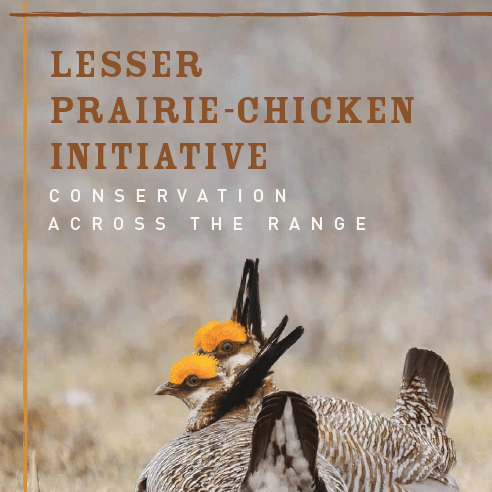
A new  report highlights Lesser Prairie-Chicken Initiative (LPCI) conservation successes across the lesser prairie-chicken’s range in the Southern Great Plains. The LPCI report,  Conservation Across the Range, showcases the strategies, partnerships, and range management practices that are helping restore prairie habitat in win-win conservation efforts that benefit agricultural producers and wildlife.

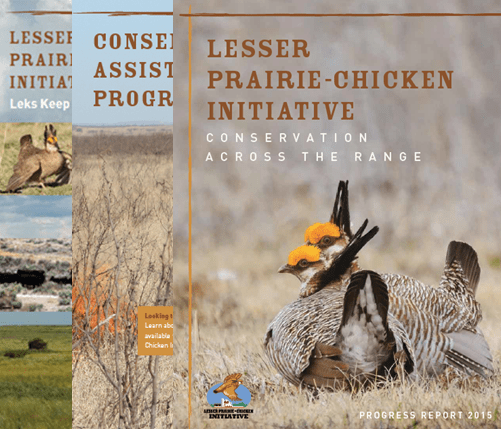
ProgressReport2015CoverLed by USDA’s Natural Resources Conservation Service (NRCS), the LPCI partnership works to enhance lesser prairie-chicken habitat, one ranch at a time. Cattle and lesser prairie-chickens both need healthy rangeland to thrive. Through voluntary conservation efforts, farmers and ranchers in the southern Great Plains are restoring habitat for this iconic bird while improving their agricultural operations.

According to the report, farmers and ranchers have made conservation improvements to 1 million acres since the NRCS launched the LPCI partnership in 2010,  through such practices as sustainable grazing systems, removing encroaching woody plants, and prescribed fire.

About 95 percent of lesser prairie-chicken habitat falls on private lands, making these conservation efforts crucial to the bird’s rebound. The bird, which the U.S. Fish and Wildlife Service designated as threatened in 2014, numbers about 29,000. The goal is to boost the bird’s population to an average of 67,000 over a ten-year period.

The report highlights the conservation efforts of a number of ranchers, including:

  • Ted Alexander, who has utilized prescribed burning and grazing to allow native grasses to flourish on his Kansas ranch.
  • Bill Barby, who is using a sustainable grazing system that promotes prairie health, providing drought-resilient forage for cattle and habitat for prairie chickens on his Kansas ranch.
  • Willard Heck, who is removing hundreds of acres of invading mesquite trees to restore habitat. Research shows that lesser prairie-chickens stop nesting in grasslands that have just one tree per 1.2 acres.

See the full Conservation Across the Range report.

NRCS’ conservation efforts for the lesser prairie-chicken are part of the agency’s Working Lands for Wildlife partnership, which steers public and private conservation investments that improve struggling landscapes, like the prairie of the southern Great Plains, while strengthening agricultural operations.